
Cime Himalaya

Ama Dablam Expedition

  • Best price guaranteed
  • No booking fees
  • Book Now, Pay Later
From US$ 6,700
Price varies by group size
  • Best price guaranteed
  • No booking fees
  • Book Now, Pay Later
Share
Print
Duration
30 days
Activity
Expedition
Max. altitude
6,812 m / 22,349 ft
Highest overnight
6,400 m / 20,997 ft
Group size
Min 1+
Difficulty
Very Strenuous
Trip starts/ends
Kathmandu / Kathmandu
Trekking starts/ends
Lukla / Lukla
Best season
October, November, April & May
Accommodation
3 star category hotel in Kathmandu, lodge during trek, Ama Dablam Base Camp, and tent camping above the base camp during the expedition.
Meals
Breakfast in Kathmandu and on full-board meal during the trek and expedition. 
Transportation
All ground transportation by private vehicle and round trip domestic flights as per itinerary.

Highlights

  • Trek through Everest Three High Passes, EBC, and Lobuche Peak (6,095m) to acclimatize before ascending Ama Dablam.
  • Tackling the first technical section of the climb, including the steep rock and ice sections.
  • Summit Push: The final stretch to the summit, including navigating through mixed ice, rock, and snow, often requiring technical skills and steady endurance.
  • Summit Ama Dablam (6,812m): Reach the top and celebrate panoramic views of Everest, Lhotse, Makalu, and the Khumbu region.
  • Descent: Carefully descending back to Base Camp while reliving the achievement.
  • Cultural Experience: Interact with local Sherpas and explore the vibrant villages like Pangboche and Namche Bazaar before and after the expedition.

Overview

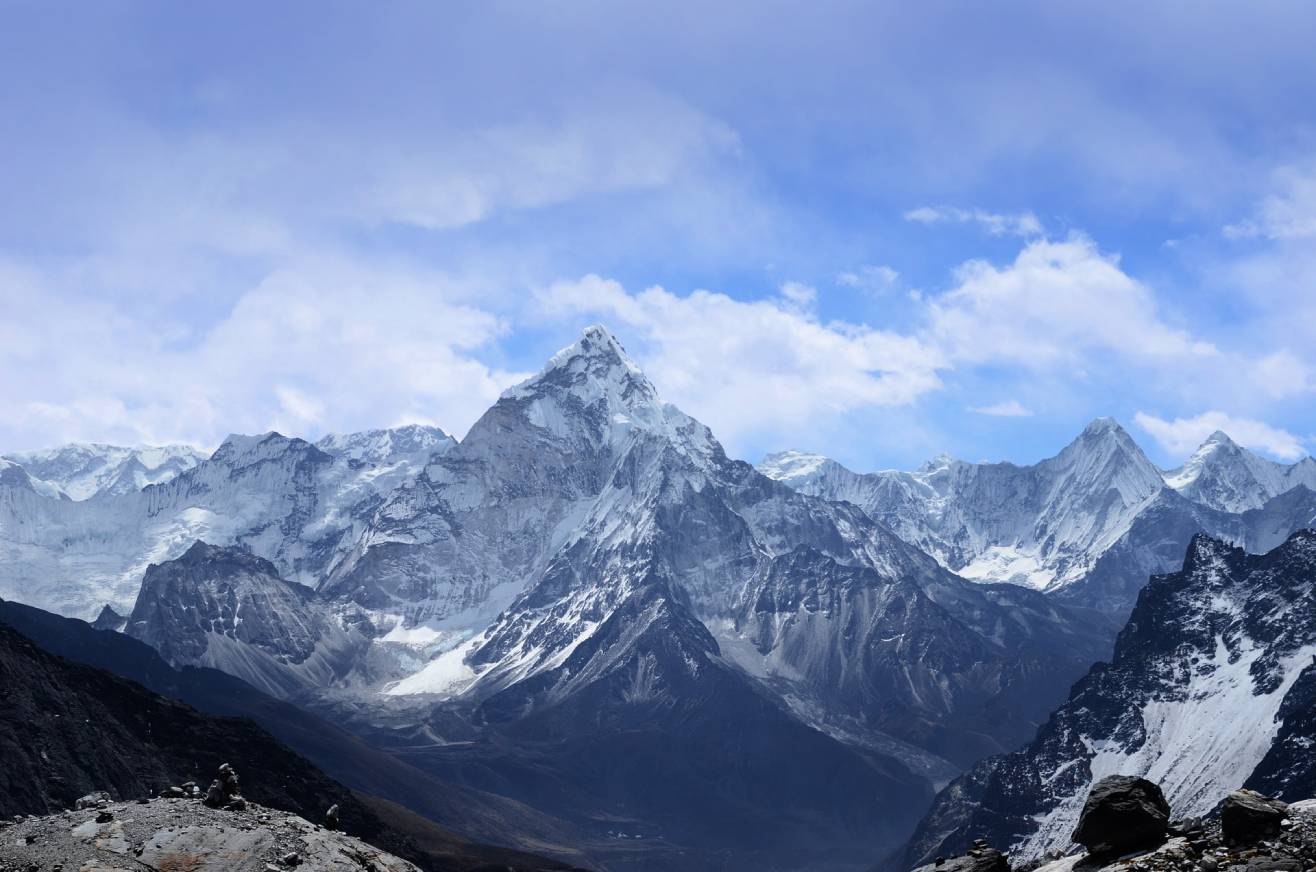
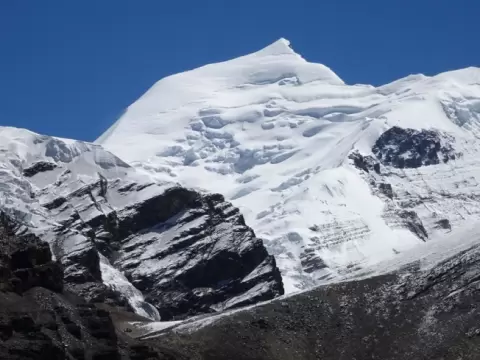
The Ama Dablam Expedition is one of the most sought-after climbs in the Himalayas, known for its stunning beauty and technical challenge. Standing at 6,812 meters (22,349 feet), Ama Dablam is often referred to as the “Matterhorn of the Himalayas” due to its distinctive pyramid shape and steep, rocky faces. It is located in the Everest region of Nepal, with views of towering peaks such as Mount Everest, Lhotse, and Makalu. This expedition offers climbers a chance to ascend one of the most beautiful mountains in the world, known for its dramatic ridges, snowfields, and alpine terrain.

Climbers on the Ama Dablam Expedition typically begin with a trek to the Everest Base Camp, passing through Sherpa villages and monasteries. From Base Camp, the climb itself is a mixture of technical rock climbing and ice and snow sections. While not as high as Mount Everest, the technical challenge and the steep ascent make it an excellent choice for experienced climbers looking to test their mountaineering skills in a less crowded, yet equally awe-inspiring environment. The summit of Ama Dablam offers breathtaking panoramic views of the Everest massif and surrounding peaks, making it a highly rewarding experience for climbers.

Ama Dablam Expedition Permits:
To explore on the Ama Dablam Expedition, climbers must obtain a few specific permits from the Nepalese government. The primary permit is the "Ama Dablam Climbing Permit," which grants access to the mountain itself. Additionally, climbers must secure a Sagarmatha National Park entry permit, as the trek to Base Camp passes through the park, which is home to some of the world's most iconic peaks. The TIMS (Trekkers' Information Management System) card is also required for all trekkers in the Everest region.

The costs of these permits are relatively affordable compared to higher mountains like Everest, but they can still vary depending on the season and the number of climbers. Cime Himalaya Trek & Expedition takes care of the entire permit process for clients, ensuring that all necessary paperwork is completed correctly and in a timely manner. This helps to alleviate any stress for climbers and allows them to focus entirely on their preparation for the climb.

Best Time for Ama Dablam Expedition:
The best time to attempt the Ama Dablam Expedition is during the two main climbing seasons: pre-monsoon (spring) and post-monsoon (autumn). The spring season, which runs from late March to early June, is the most popular time for an ascent. During this period, weather conditions are generally stable, with clear skies and mild temperatures. This is the ideal time to summit, as the mountain is less prone to unpredictable weather or avalanches. The autumn season, from late September to early November, is the second window for climbers, offering a quieter atmosphere with fewer crowds. However, the weather can be more variable, and there is a slightly higher risk of extreme conditions.

While the autumn season offers a less crowded environment, the spring season is typically preferred due to more predictable weather patterns, which are essential when attempting a high-altitude summit like Ama Dablam. Both seasons offer spectacular views of the surrounding mountains, but climbers should be prepared for challenging conditions regardless of the season they choose.

Ama Dablam Expedition Difficulty:
The Ama Dablam Expedition is considered a challenging climb, though not as technically difficult as some of the higher 8,000-meter peaks. The mountain is a non-technical climb at lower altitudes, but it requires solid mountaineering skills, especially in the upper sections. The key challenges of the climb include navigating through steep rock and ice sections, as well as using fixed ropes and ice axes to ascend the upper ridges. The most technically demanding part of the climb is the summit ridge, which involves steep rock climbing and a delicate balance of technical prowess and mental focus.

Despite its relatively lower altitude compared to peaks like Everest or K2, the difficulty of Ama Dablam lies in its steep, exposed terrain and the challenging conditions at higher altitudes. Climbers must be physically fit, experienced in rock and ice climbing, and prepared for the physical demands of high-altitude environments. Proper acclimatization is essential to prevent altitude sickness and ensure a successful summit. The expedition is not for beginners, but for those with previous experience in mountaineering, it offers a rewarding challenge.

Major Highlights for Ama Dablam Expedition:
The Ama Dablam Expedition offers climbers some of the most spectacular scenery in the world, with every aspect of the journey showcasing the grandeur of the Himalayas. One of the major highlights is the trek to Everest Base Camp, which offers sweeping views of Everest, Lhotse, Nuptse, and many other surrounding peaks. The trek through Sherpa villages such as Namche Bazaar, Tengboche, and Dingboche gives climbers a unique insight into the Sherpa culture and the spiritual significance of the Everest region.

Another highlight of the expedition is the climb itself. The technical challenge of scaling Ama Dablam’s steep rock and ice sections tests the skills of climbers, offering a sense of accomplishment as they reach each new camp. The panoramic views from the summit of Ama Dablam are unmatched, with a breathtaking 360-degree vista of Everest, Lhotse, Makalu, and other towering peaks in the region. The summit of Ama Dablam is a climber’s dream, offering an unparalleled view of the Himalayas and a profound sense of achievement.

Meals and Accommodation for Ama Dablam Expedition:
The meals and accommodations during the Ama Dablam Expedition are designed to ensure climbers are well-nourished and rested for the challenges ahead. While trekking to Everest Base Camp, climbers stay in teahouses, which offer basic accommodations with a communal dining area where climbers can enjoy hearty meals. The food in these teahouses is a mix of traditional Nepali and Western dishes, with a focus on carbohydrates and proteins to fuel climbers for the long trek.

Once at Base Camp and higher camps, the accommodation becomes more basic, with climbers sleeping in tents and eating meals prepared by the expedition’s kitchen staff. The meals at higher camps are designed for high-altitude nutrition, consisting of easy-to-digest, high-calorie foods that keep climbers energized. Despite the simplicity of the food, it is carefully prepared to ensure climbers have the necessary fuel to make the climb. Fresh fruits and vegetables are limited at higher altitudes, but the team provides essential snacks, hot drinks, and energy bars to keep climbers sustained.

Networking and Communication for Ama Dablam Expedition:
Communication is crucial during the Ama Dablam Expedition, as it ensures that climbers remain safe and connected with their team and emergency support services. At base camp and higher camps, climbers can rely on satellite phones and radios to stay in touch with expedition leaders, fellow climbers, and emergency services. This communication is essential for providing timely weather updates, addressing medical issues, and coordinating logistics during the climb.

Though mobile network coverage is limited in the Everest region, the use of satellite communication ensures that climbers are never completely isolated. Additionally, at key points along the route, climbers can receive messages from home, providing both a safety net and a morale boost. This reliable communication system is an integral part of the expedition, offering both security and peace of mind for climbers who are making their way up one of the world’s most beautiful and demanding peaks.

Why Choose Cime Himalaya Trek & Expedition?
Cime Himalaya Trek & Expedition is the ideal partner for your Ama Dablam Expedition due to our extensive experience in organizing high-altitude climbs in the Himalayas. Our team consists of seasoned professionals, including Sherpas with years of experience summiting Ama Dablam and other major peaks in the region. We are committed to ensuring the safety and success of every climber, providing expert guidance, high-quality equipment, and unparalleled logistical support.

We take care of all the details, from obtaining permits and arranging accommodations to providing nutritious meals and ensuring the necessary communication systems are in place. Our focus is on personalized service, which means we tailor each expedition to meet the specific needs of our clients, whether you are an experienced mountaineer or a climber looking to push your limits. By choosing Cime Himalaya Trek & Expedition, you are entrusting your adventure to a company that prioritizes safety, success, and the enjoyment of the journey, ensuring that your Ama Dablam Expedition is a memorable and fulfilling experience.

Trip Itinerary

Trip itineraries are customizable according to your timetable and budget. Simply, Contact Us.

Upon arriving in Kathmandu, the vibrant capital of Nepal, you'll be greeted by the bustling energy of the city. After a warm welcome at airport, you’ll be transferred to your hotel, where you can settle in and relax. Take the afternoon to explore the nearby Thamel, famous for its narrow streets lined with shops, restaurants, and cafés. Enjoy the flavors of local cuisine, perhaps trying a traditional Nepali dal bhat or momo. In the evening, attend a pre-trek briefing where your guide will share essential information about the journey ahead.

Today is a free day for us. While our climbing leaders will attend a formal briefing in the Ministry of Tourism, we will have time to rest as well as get familiarized with the local surroundings. Today, we will also be briefed on the nature of the expedition, equipment and team composition. We can also make our last minute shopping of personal items as we will be leaving for the mountains the following day.

Your adventure begins with a scenic drive from Kathmandu to Manthali, a small town in the Ramechhap district. The journey takes around 5 to 6 hours, winding through the lush hills, terraced farmlands, and rural villages of Nepal. Manthali serves as the gateway for flights to Lukla, offering an alternative to the busy Tribhuvan International Airport in Kathmandu. After reaching Manthali, you will check into a local lodge and rest for the night, preparing for your early morning flight to Lukla.

An early morning flight from Manthali to Lukla marks the start of the trekking journey. The 15 minute flight provides breathtaking aerial views of the Himalayas before landing at Tenzing-Hillary Airport, one of the most thrilling airstrips in the world. Upon arrival in Lukla, you’ll meet the trekking crew, finalize gear, and begin the trek to Phakding. The trail descends gradually through rhododendron and pine forests, passing through villages like Chheplung and Ghat before reaching Phakding, a charming settlement along the Dudh Koshi River.

Today’s trek follows the Dudh Koshi River, crossing several suspension bridges, including the famous Hillary Suspension Bridge. You will pass through Monjo, the entrance to Sagarmatha National Park, where permits are checked before continuing toward Namche Bazaar. The final stretch involves a steep uphill climb, but the reward is spectacular your first glimpse of Everest in the distance. Namche Bazaar, the bustling Sherpa town, serves as the main trading hub of the Khumbu region and offers a range of accommodations, bakeries, and trekking gear shops.

To help with acclimatization, you will spend a day in Namche with a short yet rewarding hike to the Everest View Hotel, one of the highest-altitude hotels in the world. From here, you can admire panoramic views of Everest, Lhotse, Nuptse, and Ama Dablam. The hike continues to Khumjung and Khunde, traditional Sherpa villages where you can visit the Hillary School and Khumjung Monastery, which houses a supposed Yeti scalp. You will then return to Namche for an evening of rest and exploration.

At Namche Bazaar we separate from the traditional Everest Base Camp route and walk 3 to 4 hours to Thame village. Situated along the route which historically led to the Tibetan border, Thame is the oldest village of the Sherpa people. About 150m above the town is the Thame Gompa, a charming Buddhist monastery. Overnight at Thame.

After a quiet and wonderful stop, our adventure carries on heading higher with panorama of peaks and landscapes as the route gets close to Tibet border, where Tibetans often visits Khumbu area to trade with Nepali goods, after hours of tough walk on dry areas then reaching our overnight stop at Lungdeng a small place with few tea houses or lodge offering super views.

Crossing Renjo La is a difficult day due to the altitude. Normally the weather is clear from March to May and from September to November when the prospects for favorable conditions are excellent. Enjoy outstanding views from the top of Renjo La including breathtaking views of the world’s highest peaks, Mt. Everest 8848m, Makalu 8463m, Lhotse 8516m, and Cho Oyo 8201m. Careful walking is required as the trail sharply descends to Gokyo. Overnight at Gokyo.

Today, we have acclimatization day. We will go on a hike to the Gokyo Ri (5,360m). It is worth to view the panoramic views of the Himalayas, including Mt.Everest, Mt. Lhotse, etc. We'll descend to Gokyo Valley after a wonderful time at Gokyo Ri. Since we will be traversing the Ngozumpa glacier, we must get out early for our relatively short trek today. Snowmelt during the day causes the trail to become slippery. Therefore, it makes sense to traverse the glacier as soon as possible. We will trek in the direction of Thagnag, also known as Dragnag, after exploring the glacier.

Another long day of trekking to cross the Cho La passes. Many trekkers cross Cho La; the pass is not difficult, but it is steep and involves a glacier crossing on the eastern side. After completing the pass, we descend to Dzonglha with outstanding views of Cholatse Peak (6,335m). Overnight in Dzonglha.

From Dzongla we will trek to Lobuche High Camp. After arrived at High camp, we take a good rest after lunch and prepare for the next day’s climb.

We wake at around 1 am and prepare for the climb after breakfast. Strong winds make it risky to stay on the summit after the afternoon, so we start early. From the summit of Lobuche East, panoramic mountain views are more outstanding than other peaks. After viewing the chain of mountains including Everest, Lhotse, Ama Dablam, Nuptse et cetera, we get back to the High Camp.  Overnight stay in a Lobuche.

After breakfast at Lobuche we will continue our trek towards the Everest Base Camp with views of the famous Khumbu Icefall. The hike is fairly strenuous due to the high altitude and thin air. The walk passes over rocky dunes and streams until you reach Base Camp where outstanding photo opportunities are plentiful. Return to Gorak Shep, then continue trekking to Lobuche. Overnight at Lobuche.

After breakfast in Lobuche, we begin the trek by crossing the Khumbu Glacier (2 hours) and then climb the canyon to ascend to Kongma La (5,535m). The glacier crosses and ascent up Kongma La is a difficult trek, but well worth the views of the surrounding peaks once reaching the summit. Descend into the Imja Khola valley hiking from Chhukung to Dingboche with views of Ama Dablam (6,856 m). Overnight at Chhukung (4,730m).

It’s a rest day to recover our energy and if you want you can explore surroundings. 

Today, you will head toward the base of Ama Dablam, one of the most beautiful and technically demanding mountains in the Himalayas. You will have fantastic views of Ama Dablam’s towering spires as you approach the camp. Upon arrival at Base Camp, you will settle into your accommodations and prepare for the next phase of the expedition.

You’ll have a rest day at Ama Dablam Base Camp, and it will be an important opportunity for pre-climb training. Your guides will go over technical skills, including climbing techniques, ice and rock climbing practices, and safety protocols. This training will help ensure that you are ready for the challenges ahead and familiarize you with the gear and climbing systems used on the mountain.

The rotation is not necessary after acclimatization. Due to the strenuous trails between base camp and camp II, it's best to climb directly after three high passes of Khumbu, Lobuche peak climbing, and EBC.

 SUMMIT PUSH

Ascent to camp 2 (6100 m) then camp 3 (6400 m), overnight at camp 3

After some days rest at base camp, we set off again for the summit. Camp 2 is reached within two days, and on the third day we climb to Camp 3 (6400 m). The climb from Camp 1 to Camp 3 is considered the most difficult of the entire route. A traverse first descending, then ascending takes us over a ridge to a rocky projection. We continue in very steep mixed terrain to the Tour Grise. A steep 80-meter climb (risk of rock fall) on the east-facing slope takes us to the Mushroom ridge (in snow or ice), where we pass over jumps on 60° to 70° slopes and exit the glacier.  We arrive at a narrow platform where camp 3 is located.

Sometimes, depending on weather conditions, it may be preferable to attempt the summit from camp 2.

Progress up the 45° slopes of snow and ice leading to the summit proves easier than the rocky lower sections. But the altitude and the night at Camp 3 are taking their toll. We make our way up ice slopes, overcoming a large serac on rock to finally reach the Ice flutes (50° to 60°). At the summit, breathtaking views of Everest, Lhotse, Cho Oyu and Makalu. Return by abseiling along the fixed ropes to camp 3 and if possible directly to camp 2, then base camp.

We have scheduled four safety days to cover all the contingencies that such an expedition can face. 

The descend to Imja River and ascend to Pangboche and Tengboche, reaching the Dudh Koshi River and passing through the forest trails lead us to the Namche Bazaar.

The final day of trekking retraces your steps through the familiar trails of the Sagarmatha National Park, passing by Monjo, Phakding, and several scenic suspension bridges. As you descend, you’ll feel the increasing oxygen levels, making the walk easier compared to the high-altitude sections.

Upon reaching Lukla, you can celebrate with your trekking team, enjoy a relaxing evening, and reflect on the incredible journey you have just completed.

Early in the morning, you will take a short yet thrilling flight from Lukla to Manthali, where the vast Himalayan landscapes slowly transition into rolling hills and river valleys. After landing in Manthali, you will embark on a 6 to 7-hour drive back to Kathmandu, enjoying the lush scenery of rural Nepal along the way.

This free day in Kathmandu allows you to rest, explore, and reflect on your journey. You can visit local markets, shop for souvenirs, or simply relax and enjoy the city’s atmosphere.

Today, you will be transferred to the airport for your flight home. Your Ama Dablam Expedition with Cime Himalaya Trek & Expedition concludes here, and we hope you’ll carry unforgettable memories of your Himalayan adventure. Safe travels!

Not satisfied with this itinerary? Make your own.
Plan Your Trip

Cost Includes

  • All the necessary permits for trekking and expedition.
  • All government, local taxes, and official expenses 
  • 4 nights hotel in Kathmandu (3 star category) – single room on bed and breakfast plan.
  • All the ground transportation by a private/ reserved vehicle as per itinerary.  
  • One welcome dinner in a tourist standard restaurant in Kathmandu 
  • 3 meals a day (breakfast, lunch, and dinner; including tea and coffee) along with accessible accommodation at Hotel/Lodge during the trek and at the Basecamp. Hygienic and fresh green vegetables, fresh meat, fruits, and soft drinks will be served during the entire expedition. Well-managed base camp set up for members & staff.
  • Experienced climbing Sherpa per member (1 member: 1 climbing Sherpa), during the summit period BC to the summit and BC.
  • Climbing Sherpa’ salary, allowance, equipment, food, insurance and transportation.
  • Medical & emergency rescue insurance for all involved Nepalese staff during the trek and expedition.
  • High altitude tent, necessary cooking EPI gas, cooking pot, High food for a member, Sherpa, and other crews at (C1) (C2) and (C3). Group climbing gears, and fixed and dynamic rope during the climbing period as required. Members will share tents in high camps (2 members: 1 tent).
  • Oxygen bottles and mask will be in group during the summit push in case of an emergency (with an appropriate charge).
  • Climbing Sherpa to assist in carrying your gear to the high camps.
  • A satellite phone for emergency communication carried by Sherpa, also available for members with an appropriate charge.
  • Walkie–talkie for communicating in each other 
  • 1 Government Liaison officer with full equipment, salary, and accommodation.
  • Ama Dablam climbing certificate issued by MoCTCA (after summited successfully).
  • All the necessary information 

Cost Excludes

  • Fares for international flights
  • Nepal entry visa fee on arrival at Tribhuvan International Airport: US$ 50 for 30 days and US$ 125 for 90 Days.
  • All meals in Kathmandu except breakfast 
  • Personal expenses and gear for trekking and expedition 
  • Travel insurance that is mandatory for emergency high-altitude rescue and evacuation
  • Summit bonus for climbing Sherpa minimum 1,000 USD and calculate some tips for porter minimum 300 USD.
  • Additional costs may occur due to causes beyond our control, such as landslides, weather conditions, itinerary modifications due to safety concerns, illness, changes in government policies, strikes, etc.
  • All other services, costs, and expenses not listed in the list of costs included.
  • If you depart earlier than the itinerary program, your payment will not be refunded, and early arrival or late departure expenses will not be covered by your trip cost.
Why Book with Us
  • Excellent customer service. Our travel experts are ready to help you 24/7.
  • Best price guaranteed
  • No credit card or booking fees.
  • 100% financial protection.
  • Environmentally-friendly tours.

Equipment List

We advise that carrying the appropriate and proper equipment is better than carrying an excessive quantity of equipment. So, one should only carry appropriate and only absolutely necessary equipment with self; 

HEAD
  • Bandana or headscarf, also useful for dusty conditions
  • Warm hat that covers your ears (wool or synthetic)
  • Headlight with extra batteries and bulbs
  • Sunglasses with UV protection
UPPER BODY 
  • Polypropylene shirts (2 half sleeve and 2 long sleeves)
  • Light and expedition weight thermal tops
  • Fleece wind-stopper jacket or pullover
  • 1 ultra-light down jacket 
  • 1 warm down vest and/or jacket
  • Gore-Tex jacket with hood, waterproof and breathable
HANDS
  • 1 pair of lightweight poly liner gloves.
  • 1 pair of lightweight wool or fleece gloves
  • 1 pair of mittens, consists of 1 Gore-Tex over mitt matched with a very warm polar-fleece mitt liner (seasonal)
LOWER BODY 
  • Non-cotton underwear briefs
  • 1 Hiking shorts
  • 1 pair of hiking pants
  • 1 pair of lightweight thermal bottoms (seasonal)
  • 1 pair of fleece or woolen trousers
  • 1 waterproof, windproof pants (Gore-Tex or similar)
FEET
  • 2 pairs of thin, lightweight inner socks
  • 2 pairs of heavy poly socks
  • 1 pair of Hiking boots with spare laces (sturdy soles, water-resistant, ankle support, “broken-in”)
  • 1 pair of running shoes and sandals
  • Cotton socks (optional)
SLEEPING BAG
  • 1 sleeping bag (good to -20⁰C) it’s rentable in Kathmandu. 
LUGGAGE & DAYPACK 
  • Your travel luggage with your all materials
  • A backpack (35 to 40 liters) for carrying yourself during the trek with necessary items.
  • 1 waterproof backpack covers (optional)
  • A large duffle bag (it will be provided by Cime Himalaya Trek & Expedition)
FIRST AID KIT
  • Small, personal first-aid kit. (simple and light)
  • Aspirin, first-aid tape, and plasters (Band-Aids)
  • 1 skin-blister repair kit
  • Anti-diarrhea pills
  • Anti-headache pills
  • A cough and/or cold medicine
  • Anti-altitude sickness pills: Diamox or Acetazolamide
  • Stomach antibiotic: Ciprofloxacin, etc. Do not bring sleeping pills as they are a respiratory depressant.
  • Water purification tablets or the water filter
  • 1 set of earplugs
  • Extra pair of prescription glasses, contact lens supplies
PRACTICAL ITEMS
  • 1 small roll of repair tape, 1 sewing-repair kit
  • 1 cigarette lighter, 1 small box of matches if you smoke.
  • 1 compass or GPS (optional)
  • 1 alarm clock/watch
  • 1 digital camera with extra cards and batteries
  • 2 large Ziplocs plastic bags
  • 1 water bottle of 1L or 1.5 liters 
  • 1 thermos – 500ml or 1L 
  • 1 small pocket knife
  • Binoculars (optional) if you need
  • 1 pair of adjustable trekking poles
TOILETRIES
  • 1 medium-sized quick-drying towel
  • Toothbrush/paste (preferably biodegradable)
  • Multipurpose soap (preferably biodegradable)
  • Deodorants
  • Nail clippers
  • Face and body moisturizer
  • Female hygiene products
  • Small mirror
PERSONAL HYGIENE
  • Wet wipes (baby wipes)
  • Tissue /toilet roll can buy in trek 
  • Anti-bacterial handwash
EXTRAS 
  • Reading book
  • Trail map/guidebook
  • Plug adapter (2 round pegs to 2 flat pegs)

Frequently Asked Questions

The Ama Dablam Expedition is a thrilling mountaineering journey to summit one of the most iconic mountains in the world: Ama Dablam. Standing at 6,812 meters (22,349 feet), this majestic peak is located in the Everest region of Nepal and is known for its stunning beauty and technical challenges. The mountain is often referred to as the “Matterhorn of the Himalayas” due to its distinct, pyramid-like shape. This expedition combines high-altitude climbing with breathtaking views of the surrounding Himalayan peaks, including Mount Everest, Lhotse, and Makalu. Ama Dablam is considered a challenging climb, requiring advanced mountaineering skills, but it is a rewarding experience for those with the right preparation.

Cime Himalaya Trek & Expedition is known for providing expert guidance and ensuring the safety and success of climbers attempting Ama Dablam. Our team of experienced guides and Sherpas are highly familiar with the mountain and its various challenges. We provide thorough training, support, and acclimatization plans, making sure that climbers are well-prepared for both the physical and technical demands of the expedition. Our local expertise and commitment to excellence in mountaineering ensure that you will have an unforgettable experience, whether you're summiting Ama Dablam for the first time or looking to add another major peak to your climbing portfolio.

The Ama Dablam Expedition is a challenging climb that requires a high level of fitness, both physically and mentally. Climbers should have previous experience in high-altitude mountaineering (preferably on peaks over 6,000 meters/19,685 feet) and should be accustomed to technical climbing techniques, including using ice axes, crampons, and ropes. Physical conditioning should focus on endurance, strength, and cardiovascular fitness. Mental toughness and the ability to handle altitude-related challenges are crucial, as the climb requires focus, persistence, and the ability to manage fatigue over several weeks of climbing. Prior training on similar peaks and in harsh environments is recommended.

To climb Ama Dablam, climbers need specialized mountaineering equipment. Essential gear includes:


Mountaineering boots, crampons, and ice axes

Climbing harnesses, ropes, and carabiners

High-altitude sleeping bags rated for extreme temperatures

Down suits, jackets, and gloves suitable for freezing temperatures

Climbing helmet, headlamp, and goggles for safety

Oxygen masks and tanks (for higher camps if necessary)

Avalanche transceivers, first-aid kits, and other personal safety items

Cime Himalaya Trek & Expedition provides a detailed gear list and can assist with renting equipment for the climb. We ensure that climbers are fully equipped for all conditions, from trekking to Base Camp to summiting the peak.

Ama Dablam is known for its technical climbing sections, which include steep rock faces, ice sections, and exposed ridges. The climb requires solid technical skills, including ice climbing and rock climbing techniques. Climbers must be prepared to navigate mixed terrain, where the ability to use ropes, harnesses, and other climbing gear is crucial. The ascent includes several high-altitude camps, and the final push to the summit involves challenging terrain, requiring climbers to have strong stamina and technical proficiency. However, compared to other high-altitude peaks, Ama Dablam is generally considered a challenging yet accessible peak for climbers with previous experience.

The cost of the Ama Dablam Expedition typically ranges from $8,000 to $15,000 USD, depending on the level of service you require. This includes all necessary permits, base camp facilities, guide and Sherpa fees, meals, accommodation, and transportation (including the flight from Kathmandu to Lukla). The cost also covers high-altitude climbing gear, oxygen supply (if needed), and all logistical arrangements for the climb. Cime Himalaya Trek & Expedition offers flexible packages, including full-service expeditions and more tailored options, ensuring you receive the right support for your goals and budget.

As with any high-altitude expedition, climbing Ama Dablam carries inherent risks. These risks include altitude sickness, extreme weather, avalanches, rockfalls, and crevasses. Technical climbing also adds additional risk factors, such as falls, equipment failure, or injury. However, the experienced guides and Sherpas from Cime Himalaya Trek & Expedition are well-prepared to manage these risks through careful planning, acclimatization, and safety protocols. We ensure climbers are well-equipped with the necessary safety gear and monitor health conditions closely to minimize risks and handle any emergencies effectively.

Preparing for the Ama Dablam Expedition requires both physical and mental training. Key components of preparation include:


Physical fitness: Focus on cardiovascular endurance, strength, and flexibility. Training in high-altitude conditions (if possible) and using mountaineering equipment will help prepare you for the technical aspects of the climb.

Climbing experience: If you haven’t already, gaining experience in ice and rock climbing is important. Training on smaller peaks or through mountaineering courses can help develop essential technical skills.

Mental resilience: Preparing mentally for the demands of the climb is equally important. Being prepared to face altitude challenges, cold weather, and physical exhaustion is essential for success. Cime Himalaya Trek & Expedition provides personalized advice on how to structure your training, and we also offer pre-expedition consultations to ensure that you are fully prepared for the challenges ahead.

Booking the Ama Dablam Expedition is simple—just contact us via our website or email. After an initial consultation to discuss your experience, goals, and physical condition, we’ll create a personalized itinerary and begin the booking process. We’ll take care of all the logistics, from obtaining permits to arranging flights and accommodations. Once you're ready to go, our team will ensure that you’re fully prepared with the proper gear, training, and support, so you can focus on reaching the summit of Ama Dablam with confidence.

Read more FAQs

Similar Trips

Expedition
Mt. Everest Expedition - 63 days
Difficulty
Very Strenuous
Max. altitude: 
8,848 m
US$ 38,000 PP IN GROUP
Explore
Expedition
Everest and Lhotse Expedition - 60 days
Difficulty
Very Strenuous
Max. altitude: 
8,848 m
Price on request
Explore
Expedition
Baruntse with Mera Peak expedition - 36 days
Difficulty
Very Strenuous
Max. altitude: 
6,461 m
Price on request
Explore
Expedition
Mt. Manaslu Expedition - 43 days
Difficulty
Very Strenuous
Max. altitude: 
8,163 m
US$ 14,200 PP IN GROUP
Explore
Expedition
Mt. Himlung Himal Expedition - 29 days
Difficulty
Strenuous
Max. altitude: 
7,126 m
US$ 6,700 PP IN GROUP
Explore

Join Our Newsletter

Sign up to stay updated with latest offers, recent events and more news.