Cime Himalaya

Manaslu Circuit Trek

  • Best price guaranteed
  • No booking fees
  • Book Now, Pay Later
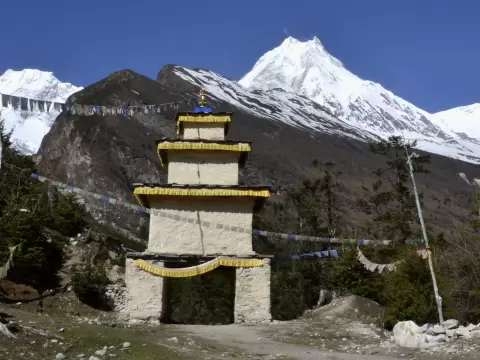
Mt. Manaslu (8163m), view from Samagaon.
From US$ 1,515
Price varies by group size
  • Best price guaranteed
  • No booking fees
  • Book Now, Pay Later
No. of people Price per person
2 - 2 US$ 1,515
3 - 4 US$ 1,475
5 - 6 US$ 1,335
7 - 8 US$ 1,295
9 - 10 US$ 1,245
11 - 14 US$ 1,185
15 - 20 US$ 1,125
Share
Print
Duration
14 days
Activity
Trekking
Max. altitude
5,160 m / 16,929 ft
Highest overnight
4,470 m / 14,665 ft
Group size
Min 2+
Difficulty
Moderate
Trip starts/ends
Kathmandu / Kathmandu
Trekking starts/ends
Machhakhola / Syange
Best season
Mar – June & Oct – December
Accommodation
13 nights in guesthouse/ lodge during the trek.
Meals
On full board during the trek (B,L,D).
Transportation
All land transportation as per itinerary. 
Trip route
Kathmandu-Machhakhola-Jagat-Dyang-Namrung-Syalagaon-Samagaon-Samdo-Dharmashala-Bhimtang-Gho-Tal-Syage-Bensishahar-Kathmandu.

Highlights

  • Scenic drive from Kathmandu to Machhakhola, passing through picturesque hills and rivers.
  • Trek along the Budhi Gandaki River, crossing suspension bridges and traditional villages.
  • Experience the rich Tibetan-influenced culture in villages like Ghap, Namrung, Samagaon and Samdo.
  • Acclimatization and exploration at Samagaon (3,530 m) with stunning Manaslu views.
  • Cross the Larkya La Pass (5,160 m), offering breathtaking Himalayan panoramas.
  • Descend through alpine meadows, rhododendron forests, and charming settlements.
  • Stunning views of Mt. Manaslu (8,163 m), Himlung, Cheo Himal, and the Annapurna range.
  • A perfect blend of adventure, cultural immersion, and remote Himalayan landscapes.

Overview

The journey begins with a scenic drive from Kathmandu to Machhakhola, a small village on the banks of the Budhi Gandaki River. Winding through lush hills and terraced fields, the drive offers a glimpse into Nepal’s rural beauty. From Machhakhola, the trek kicks off with a gradual ascent through subtropical forests and rocky trails, leading to Jagat, a charming village with traditional stone houses. As the trail continues, the landscape shifts, revealing deeper gorges and crossing suspension bridges before reaching Dyang, where the valley starts opening up to stunning Himalayan views.

Ascending further, the trail meanders through rhododendron forests and picturesque villages before reaching Namrung, a beautiful settlement offering the first panoramic view of Manaslu. The journey continues to Samagaon, one of the region’s largest villages, where trekkers spend an extra day acclimatizing and exploring the surrounding landscapes, including the option to visit the sacred Birendra Lake or the Pungyen Gompa. From Samagaon, the path gradually climbs to Samdo, a remote Tibetan refugee village near the Tibetan border, offering breathtaking views of the surrounding peaks.

As the altitude increases, the trek progresses towards Dharamsala, also known as Larkya Base Camp, where trekkers prepare for the highest and most challenging section of the journey. An early morning ascent leads to the crossing of the formidable Larkya La Pass at 5,160 meters, providing awe-inspiring panoramic views of Himlung, Cheo Himal, and the Annapurna range. The descent from the pass is long but rewarding, eventually arriving at Bimthang, a picturesque valley surrounded by snow-capped peaks.

Continuing the descent, the landscape transitions from alpine terrain to lush forests, passing through Gho and then reaching Tal, where the roaring Marsyangdi River carves through the dramatic gorge. The trek concludes with a scenic drive from Tal to Besi Shahar and then back to Kathmandu, marking the end of an unforgettable adventure through the remote and culturally rich Manaslu region.

Major Viewpoints & Mountains
The Manaslu Circuit Trek offers some of the most breathtaking viewpoints in the Himalayas, with Mt. Manaslu (8,163 m) as the crown jewel of the journey. This eighth-highest peak in the world dominates the skyline as trekkers gradually ascend through the rugged terrain. The first clear view of Manaslu appears from Lho (3,180 m), where the mountain rises majestically above the village. As the trek progresses, even more spectacular panoramas unfold, particularly fromShyalagaon and Samagaon (3,530 m), a village surrounded by glaciers and towering peaks.

One of the most significant highlights of the trek is the crossing of Larkya La Pass (5,160 m), the highest point of the route. From the summit of the pass, trekkers are rewarded with a 360-degree view of the Himalayas, including Himlung Himal (7,126 m), Cheo Himal (6,820 m), Kang Guru (6,981 m), and the Annapurna range in the distance. The dramatic contrast between the barren, icy landscapes of the north and the lush greenery of the descending valleys creates an unforgettable visual experience.

Apart from the Manaslu range, the trek also offers glimpses of the Ganesh Himal range in the early days of the journey, particularly from Machhakhola and Jagat. As trekkers venture into higher altitudes, the landscapes become more rugged, with glaciers, deep gorges, and towering ice walls adding to the grandeur of the surroundings. These viewpoints make the Manaslu Circuit Trek one of the most scenic journeys in Nepal.

Natural Attractions
The Manaslu region is a treasure trove of natural wonders, from dense subtropical forests to high-altitude glaciers. The trek follows the Budhi Gandaki River, which carves a deep gorge through towering cliffs, creating dramatic landscapes throughout the lower sections. The initial days of the trek pass through lush green hills, terraced farmlands, and cascading waterfalls, providing a beautiful contrast to the arid highlands ahead.

One of the most unique aspects of this trek is the diversity of ecosystems. As the altitude increases, the scenery shifts to rhododendron forests, alpine meadows, and glacial moraines. The Pungyen Glacier, near Samagaon, is a breathtaking natural attraction, offering close-up views of Manaslu and its surrounding peaks. The pristine Birendra Lake, a turquoise glacial lake near Samagaon, is another must-visit spot for trekkers looking to soak in the serenity of the Himalayas.

The high-altitude terrain beyond Samdo leads to the Larkya Glacier, which stretches along the route to Larkya La Pass. This section of the trek presents an otherworldly landscape, with towering ice formations and snow-covered trails. The journey then descends into the lush valleys of the Annapurna region, where dense pine and oak forests dominate the scenery. The combination of these diverse natural attractions makes the trek a truly immersive experience for nature lovers.

Cultural Attractions & Villages
The Manaslu region is not only known for its natural beauty but also for its rich cultural heritage. The trek passes through numerous traditional Tibetan-influenced villages, where ancient customs and lifestyles are still preserved. Villages like Jagat, Ghap, Namrung, Lho, Samagaon and Samdo offer a glimpse into the daily lives of the Gurung and Tibetan communities, who have lived in these remote areas for centuries. Their unique stone houses, intricate Buddhist murals, and traditional farming methods reflect a deep connection to the land and their ancestors.

One of the cultural highlights of the trek is the village of Samdo (3,690 m), a settlement located near the Tibetan border. The people here are direct descendants of Tibetan traders, and their dialect, clothing, and customs are heavily influenced by their Tibetan heritage. Samdo serves as an important trade hub, where locals barter goods like yak butter, wool, and salt with their Tibetan neighbors. Visitors to the village can witness these age-old trade practices and even participate in local festivals if the timing aligns.

As the trek descends into the Annapurna region, the cultural landscape shifts slightly, with influences from the Gurung and Magar communities becoming more prominent. The village of Tal (1,700 m), with its beautiful waterfalls and terraced fields, marks the transition from Tibetan culture to the traditional hill culture of central Nepal. This cultural diversity, combined with the warm hospitality of the locals, makes the trek a fascinating journey into the heart of Nepal’s ethnic heritage.

Monasteries & Religious Landmarks
The trek is dotted with numerous chortens, prayer wheels, and mani walls, which reflect the deep spiritual traditions of the region. The Ribung Gompa in Lho is another significant religious site, offering stunning views of Manaslu alongside beautifully crafted Buddhist murals and statues. Near Samagaon, trekkers can visit Pungyen Gompa, an isolated monastery that provides insight into the spiritual connection between the people and the mountains.

As the trek progresses, every village has small monasteries or stupas that add to the sacred ambiance of the journey. The influence of Tibetan Buddhism is especially prominent in higher-altitude villages like Samdo and Dharamsala, where prayer flags flutter in the wind against the backdrop of snow-capped peaks. These monasteries and religious landmarks make the trek not only an adventure but also a deeply enriching cultural and spiritual experience.

Best season for Manaslu Circuit Trek 
The best time to undertake the Manaslu Circuit Trek is during the spring (March to May) and autumn (September to November) seasons. These months provide the most stable weather conditions, clear skies, and stunning mountain views, making them ideal for trekking in the high-altitude terrain of the Manaslu region.

During spring, the hills and valleys come alive with blooming rhododendrons, adding vibrant colors to the landscape. The temperatures are moderate, and the days are longer, allowing for more comfortable trekking. Wildlife in the region is also more active during this time, providing opportunities to spot Himalayan blue sheep and other rare species. The trails, although busy, are not as crowded as the more commercial trekking routes like the Annapurna Circuit or Everest Base Camp.

Autumn is another perfect time for this trek, as the monsoon rains would have cleared the dust and pollution from the atmosphere, offering crystal-clear mountain views. The skies are consistently blue, and the temperatures are cool but not harsh, making it easier to cross the Larkya La Pass (5,160 m) without extreme weather challenges. Additionally, autumn is the season of major Nepalese festivals like Dashain and Tihar, allowing trekkers to experience local culture and celebrations along the way.

While trekking in winter (December to February) is possible, it is only recommended for experienced trekkers. The region, especially near Larkya La Pass experiences heavy snowfall, making the trails more difficult and some passes impassable. Similarly, summer/monsoon (June to August) is not ideal due to heavy rainfall, landslides, and leeches along the lower trails. However, for trekkers who enjoy solitude and lush green landscapes, the monsoon season still offers a unique experience.

Difficulty level of the Manaslu Circuit Trek 
The Manaslu Circuit Trek is classified as a moderate trek, requiring good physical fitness, stamina, and prior trekking experience in high-altitude regions. The trek involves long daily walks, steep ascents and descents, and significant altitude gain, making it suitable for trekkers who are well-prepared for strenuous journeys.

One of the biggest challenges of this trek is the altitude gain. Starting from Machhakhola (930 m), the trail gradually climbs above 3,000 meters at Samagaon and reaches the highest point at Larkya La Pass (5,160 m). The risk of altitude sickness (AMS) increases as trekkers ascend, making proper acclimatization days, like the one at Samagaon, essential for a safe and enjoyable journey. The detour to Serang Gompa (3,050 m) also involves steep climbs and remote trails, adding an extra challenge to the trek.

The daily trekking hours range from 6 to 8 hours, with some days being even longer, such as the crossing of Larkya La Pass, which requires 9 to 10 hours of trekking in high-altitude conditions. The terrain varies from forested trails and rocky paths to glacial moraines and exposed ridges, demanding endurance and strong trekking skills. While no technical mountaineering is required, trekkers should be comfortable walking on uneven, icy, or snow-covered trails, especially in colder months.

For those with prior trekking experience and a strong fitness level, the Manaslu Circuit Trek is a highly rewarding adventure. It offers a true wilderness experience, unlike more commercialized treks, and the challenges make the journey even more fulfilling. With proper preparation, a slow and steady pace, and expert guidance from a trusted trekking company, this trek can be an unforgettable experience.

Why Choose the Manaslu Circuit Trek with Serang Gompa with Cime Himalaya Trek & Expedition?
Choosing Cime Himalaya Trek & Expedition for your Manaslu Circuit Trek ensures a safe, well-organized, and enriching experience. With years of expertise in Himalayan trekking, our team provides professional and personalized service, making your journey through the Manaslu region smooth and enjoyable. Our experienced guides and porters are well-trained in high-altitude trekking, first aid, and safety protocols, ensuring you have the best support throughout the trek.

We offer a unique itinerary that includes the remote Pungyen Gompa, a hidden Buddhist monastery rarely visited by trekkers. This special addition to the classic Manaslu Circuit Trek provides a more immersive experience into the spiritual and cultural richness of the region. Our itinerary also allows for ample acclimatization time, minimizing the risk of altitude sickness and making the trek more comfortable and enjoyable.

At Cime Himalaya Trek & Expedition, we prioritize responsible tourism and sustainability. We work closely with local communities, supporting eco-friendly practices and ensuring fair wages for our guides and porters. By choosing us, you contribute to the well-being of the Tibetan-influenced communities along the Manaslu Circuit while experiencing the beauty of Nepal’s untouched landscapes in the most ethical way possible. With our commitment to safety, quality service, and authentic Himalayan experiences, we guarantee a trek that is both adventurous and culturally enriching.

Trip Itinerary

Trip itineraries are customizable according to your timetable and budget. Simply, Contact Us.

Your journey begins with an early morning drive from Kathmandu, following the winding Prithvi Highway alongside the Trishuli River. As the road veers west, you'll pass picturesque villages, terraced fields, and dense forests before reaching the town of Arughat. From here, the road gets rough and bumpy as we continue along the Budhi Gandaki River, passing Soti Khola before finally arriving at Machhakhola. This small riverside settlement is the starting point of our trek, where we settle in for the night and prepare for the adventure ahead.

Our trek begins with a gentle ascent through the forested trails, crossing several suspension bridges over the Budhi Gandaki River. The trail undulates past Khorlabesi and the natural hot springs at Tatopani, where trekkers often pause to relax. From here, the path continues with steep climbs and descents, eventually leading us to a ridge-top settlement at Dobhan. The trek then follows a narrow gorge, leading us to the stone-paved village of Jagat, the entry checkpoint for the Manaslu Conservation Area. We spend the night here, surrounded by stunning mountain views.

Leaving Jagat, we climb stone staircases and pass through lush forests before reaching the village of Salleri, which offers breathtaking views of Sringi Himal. The trail gradually descends to Sirdibas before crossing a long suspension bridge to reach Philim, a large Gurung village. From here, we trek through pine and rhododendron forests, following a scenic ridge above the Budhi Gandaki. The trail narrows as we approach the remote village of Dyang, where we settle in for the night.

After a brief walk beyond Deng, we cross the Budhi Gandaki and climb to Rana at 1910m. From the bridge, we climb a bit to join a trail from Bhi, then head west up the Budhi Gandaki valley. The trail also passes through forests and mani where we turn towards a corner that contours to Ghap. Even though there is another route, we take the route through Prok village. Prok village has a viewpoint for a beautiful sight of Siringi Himal. We further cross the Budi Gandaki several times today and come across several gompas en route. The trail follows the river upstream through a dense forest. After crossing the river at an impressive spot where it thunders down a narrow gorge, the forest becomes less dense and the trail is fine again. The pleasant walk continues and after a last steep climb, we reach Namrung. 

Our trek to Shyalagaon commences from Namrung. Crossing a large stream flowing down from the Lidanda Glacier, we reach Sho. From here, we get our first view of Mount Manaslu North and then the main summit. After Sho, Lho is the next village. The Lho village is located at 3,150m and here you can see a monastery, several Chortens, and Mani walls with colorful prayers flags. Finally, our trek stops today at Shyala. Shyala offers a view of Himala Chuli, Peak 29/ Ngadi Chuli, and Manaslu. In the evening, the breathtaking sunset views of Manaslu and other snowcapped peaks are incredible.

Trek from Shyala Gaon to Sama Gaon, nestled at an elevation of 3,530 meters, is a captivating journey through the stunning landscapes of the Manaslu region in Nepal. Starting from Shyala Gaon, trekkers embark on a roughly 6-hour adventure that leads them through the scenic route via Pungyen Gumba.

Pugyen Gumba is a quiet Buddhist monastery along the Manaslu Circuit in Nepal. It’s at a high place, about 3,530 meters up in the mountains. This place gives trekkers a calm and peaceful break in the beautiful Himalayan scenery. The monastery is known for its spiritual feeling and great views of the mountains and the glacier around it. People walking the Manaslu circuit often feel comfort and peace at Pungyen Gompa, making it a part of the journey to remember.

The acclimatization day is a crucial pause in the trek, offering trekkers a chance to adjust to the higher altitudes encountered along the Manaslu circuit. This designated day allows for a strategic break, ensuring a safer and more comfortable ascent. Trekkers have the option to embark on a side trip to either Manaslu Base Camp or Birendra Lake, both providing unique and breathtaking experiences.

The journey to Manaslu Base Camp unveils panoramic views of the iconic mountain, while Birendra Lake offers a serene setting surrounded by Himalayan splendor. This day is not just about acclimatization but also an opportunity to explore extraordinary destinations, making it a valuable and enriching segment of the Manaslu circuit trek.

The walk from Sama Gaon to Samdo is a brief yet fulfilling part of the Manaslu Circuit, taking about 4 hours and reaching a height of 3,690 meters. As people start this journey, they see the stunning Himalayan views around Sama Gaun. The path goes through different kinds of landscapes, showing glimpses of snowy mountaintops and deep valleys, making the walk really beautiful. 

You will arrive there for lunch. After lunch, you can hike up the valley directly behind Samdo village. This hike will take us to one of the trade passes to Tibet for excellent views of Mt. Manaslu along with other Himalayan ranges including Simrang, Hiunchuli, Ngadi, Larkye Peak, Cheo and possibly Kang Guru behind the pass.

Even today, we continue our walk down the edge, cross the wooden bridge over Budi Gandaki and begin walking upward. Upon crossing two streams and witnessing the Larkya Glacier, we go around the valley of the Salka Khola and climb up again to the stone guest house (4,450 m), which is very simple and room have to share for 4 people. The short walk today also leaves plenty of time for acclimatization and relaxing in the afternoon.

After a short climb, we reach a valley on the north side of the Larkya Glaciers from where we can enjoy great views of Cho Danda and Larkya Peak. Finally, we walk across moraines of the glacier, making a gradual ascent which becomes steeper only in the last section of the pass. From the pass, there are outstanding views of Himlung Himal, Cheo Himal, Kangguru and the huge Annapurna II. It is a longer day than usual to Bimtang, but to walk into these low pastures with the evening mist coming in with Mt. Manaslu looming close by is an overwhelming experience. 

From a ridge at Bimthang, we can enjoy great views of Mt. Manaslu, Lamjung Himal, Himlung Himal and Cheo Himal. We descend further and cross a high pasture (Sangure Kharka) followed by a bridge over Dudh Khola. We walk through rhododendron forest and follow a trail through a narrow valley until we reach the highest cultivated land of the valley at Karche, 2,785 meters. We pass across fields before making a steep climb over a ridge. The trail comes off the ridge in a big, sweeping arc to the river bank at 2,580m. A short distance beyond is the village of Gho. Due to yesterday's tiredness, we stop for an overnight at Gho.

We descend regularly through a beautiful forest to get Tilje village then we climb over a small ridge and enjoy the stone paved trail as it passes through a beautiful village. We then cross the bridge over Dudh Khola and climb up through a chorten-shaped arch, pass a main wall, and reach the Thonje village. In the village, we pass through a police checkpoint and continue to Dharapani. We have entered the Annapurna circuit section from Dharapani. Further down, we come across Karte village and after quite a bit of walking, we cross a bridge over Marshyangdi Khola. We also come across some mani walls before reaching the village of Tal, situated at the foot of a large waterfall.

We follow the trail to Chyamje village, crossing Marshyangdi Khola once again. The Marsyandi valley opens with its terraced fields and villages clinging very high to the hillsides. The trail then descends through villages and pine forests to Syange.

The drive from Syange to Kathmandu to Besishahar offers one an opportunity to enjoy both hill and mountain landscapes. The drive is often along the banks of the Marsyangdi and Trishuli rivers. We also drive by some beautiful villages with farming terraces on both sides of the road. In Kathmandu, we will be escorted to our hotel. The day in Kathmandu can either be spent in leisure or perhaps we catch up with some last-minute shopping. Before you leave for home, we will have a farewell dinner to celebrate the successful completion of your Nepal trip.

Join Cime Himalaya Trek & Expedition for an unforgettable journey through one of Nepal’s most spectacular trekking routes!
Not satisfied with this itinerary? Make your own.
Plan Your Trip

Cost Includes

  • Permit: All the necessary trekking permits.
  • Accommodation: 13 nights in guesthouse/ lodge during the trek.
  • Road transportation: All land transportations by a local vehicle from Kathmandu to Machhakhola, Syange to Kathmandu and by taxi or car from/to the hotel and bus park. If you prefer to drive by private vehicle for more comfort, we provide it at an additional cost.
  • Meal: On full-board meals (breakfast, lunch, and dinner) with a cup of tea or coffee each meal during the trek, as well as seasonal fresh fruit dessert every evening after dinner.
  • Filed staff: An experienced government-licensed, English-speaking trekking guide and necessary porter normally 1 porter for 2 trekkers who carry max 25 kg, as well as their meals, transportation, insurance, accommodations, and equipment. If there are more than 4 people in a group, there will be a guide assistant.
  • Equipment: Each of you is given a waterproof duffle bag by our agency to use during your trek. Leave the materials you don't need for trekking in your travel bag at your hotel in Kathmandu.
  • All government, local taxes, and official expenses
  • Water purification tablets to purify your water during the trek for safe drinking water.
  • An oximeter to measure your oxygen and pulse level during the trek in the mountain is very useful for all trekkers to be aware of high altitude sickness.
  • We assist in arranging emergency rescue operations in the event of complex health conditions, and your travel insurance will cover the cost.

Cost Excludes

  • Fares for international flights
  • Nepal entry visa fee on arrival at Tribhuvan International Airport: US$ 50 for 30 days.
  • All meals and accommodation in Kathmandu.
  • Personal expenses: shopping, snacks, boiled water, extra tea/coffee, cold drinks, hot shower, alcohol, Wi-Fi, telephone call, battery re-charge fee, extra porters, etc.
  • Your personal trekking/hiking gear 
  • Travel insurance that is mandatory for emergency high-altitude rescue and evacuation
  • Tips for guides and porters that are highly recommended
  • Additional costs may occur due to causes beyond our control, such as landslides, weather conditions, itinerary modifications due to safety concerns, illness, changes in government policies, strikes, etc.
  • All other services, costs, and expenses not listed in the list of costs included.
  • If you depart earlier than the itinerary program, your payment will not be refunded, and early arrival or late departure expenses will not be covered by your trip cost.

Trip Info

Food & Accommodations during the trek
The Manaslu Circuit Trek takes trekkers through remote villages, offering a mix of traditional teahouses and lodges for accommodation. Unlike the Everest or Annapurna regions, the Manaslu trek is less commercialized, meaning the lodges are simpler but provide basic comfort. In lower elevations like Machhakhola, Jagat, and Dyang, accommodations include basic teahouses with small rooms, shared bathrooms, and communal dining areas. As you ascend to higher altitudes, such as Samagaon and Samdo, the facilities become more rustic, often with wooden beds, thick blankets, and common sleeping areas in some locations. At Dharamsala (Larkya Base Camp), the highest overnight stop before the pass, accommodation is extremely basic, with small shelters and limited space.

Food on the trek mainly consists of Nepali and Tibetan cuisine, with common meals including dal bhat (rice with lentils and vegetables), Tibetan bread, momo (dumplings), noodle soups, fried rice, and porridge. As you reach higher altitudes, the food options become more limited due to the remoteness of the area. In teahouses, meals are usually prepared using locally available ingredients, ensuring fresh and hearty portions to keep trekkers energized. Hot tea, coffee, and garlic soup (believed to help with altitude sickness) are widely available. While some lodges offer limited Western dishes like pasta and pancakes, it's best to embrace local meals for both nutrition and sustainability.

Drinking Water during the trek.
Safe drinking water is essential during the trek, and trekkers have multiple options. Bottled water is available at teahouses and small shops along the trail, but it becomes expensive at higher altitudes due to the difficulty of transportation. Instead of relying on bottled water, trekkers are encouraged to use refillable bottles and purification methods to minimize plastic waste and protect the environment.

Most teahouses provide boiled water, which is one of the safest options for drinking. Trekkers can request boiled water for a small fee, which helps support the local teahouses. Another popular option is using water purification tablets or drops, such as iodine or chlorine, which are lightweight and effective in treating water from local streams and taps. Many trekkers also carry portable water filters like LifeStraw or SteriPEN, which provide instant purification.

Along the trek, numerous natural water sources like rivers and streams flow from glaciers and high-altitude lakes. While these may look clean, they can contain bacteria or contaminants, so it's always recommended to treat or boil the water before drinking. Staying hydrated is crucial, as the dry mountain air and high altitude can quickly lead to dehydration. Trekkers should aim to drink at least 3 to 4 liters of water per day to maintain energy levels and prevent altitude sickness.

Charging Facilities during the trek
Since the Manaslu region is remote, electricity and charging facilities are limited, especially at higher altitudes. In lower villages like Machhakhola, Jagat, Dyang and Namrung teahouses have basic electricity, often powered by local hydropower, allowing trekkers to charge their devices in the dining areas. However, as the trek progresses to higher villages like Samagaon and Samdo, electricity becomes scarcer, and teahouses charge extra fees (USD 2-5 per charge) for charging phones, cameras, and power banks.

At Dharamsala, charging facilities are very limited or unavailable, as these locations rely on solar power with minimal electricity supply. It's highly recommended that trekkers bring extra power banks and solar chargers to ensure they have enough battery life for cameras, GPS devices, and phones. Solar panels attached to backpacks can also help generate power while trekking during the day.

To conserve battery life, trekkers can keep their phones on airplane mode, lower screen brightness, and turn off unnecessary apps. Some teahouses may have communal charging stations, but these can get crowded, so it's best to charge whenever the opportunity arises. Given the remoteness of the region, being energy-efficient and prepared with backup power sources is key to staying connected and capturing the trek’s breathtaking moments.

Network & Communications
The network and communication facilities along the Manaslu Circuit Trek are improving, but connectivity remains limited and unreliable, especially at higher altitudes. In lower regions like Machhakhola, Jagat, and Dyang, mobile networks (mainly NCELL and NTC) work in certain spots, allowing trekkers to make calls and use mobile data. However, as the trek progresses toward higher elevations like Samagaon, Samdo, and Serang Gompa, signals become weaker or completely unavailable.

For those needing better connectivity, some teahouses offer Wi-Fi services for an additional charge (USD 3-5 per hour), especially in larger villages like Samagaon. However, Wi-Fi speeds can be very slow and unreliable due to limited infrastructure. In remote locations such as Dharamsala and Larkya La Pass, there is little to no network coverage.

To stay connected in emergencies, trekkers can rent or carry a satellite phone or Garmin GPS device for reliable communication. Trekking guides from Cime Himalaya Trek & Expedition also carry emergency communication devices to ensure safety. For trekkers who need periodic updates with family or work, it's best to inform them beforehand about the limited communication options and plan accordingly.

Weather Conditions on the trek
The weather in the Manaslu region varies greatly depending on the season and altitude, making it important for trekkers to be prepared for a range of conditions. In the spring (March-May) and autumn (September-November), the weather is generally stable, with mild temperatures in lower regions and cold but manageable conditions at higher elevations. Days are usually sunny and clear, providing excellent visibility of the mountains, while nights can be cold, dropping to -5°C to -10°C at higher altitudes.

In winter (December-February), temperatures drop significantly, especially above 3,000 meters, where temperatures can fall to -15°C or lower. Snowfall is common at higher altitudes, making the Larkya La Pass crossing more difficult and risky. Dharamsala can become extremely cold, requiring heavy winter gear and proper preparation for sub-zero temperatures.

During the monsoon season (June-August), heavy rainfall makes the lower trails slippery and prone to landslides, while the higher regions remain drier due to the rain shadow effect. The trails can become muddy, and leeches are common in forested sections, making this season less favorable for trekking. However, for those who enjoy solitude and lush green landscapes, the monsoon season offers a unique and quieter experience.

Regardless of the season, layered clothing, waterproof gear, and proper insulation are essential. Weather conditions in the mountains can change suddenly, with high winds and unexpected snowfall possible even in peak trekking months. With careful preparation and guidance from experienced trekking professionals like Cime Himalaya Trek & Expedition, trekkers can navigate the challenges and enjoy the stunning landscapes of the Manaslu Circuit.
Why Book with Us
  • Excellent customer service. Our travel experts are ready to help you 24/7.
  • Best price guaranteed
  • No credit card or booking fees.
  • 100% financial protection.
  • Environmentally-friendly tours.

Equipment List

We advise that carrying the appropriate and proper equipment is better than carrying an excessive quantity of equipment. So, one should only carry appropriate and only absolutely necessary equipment with self; 

HEAD
  • Bandana or headscarf, also useful for dusty conditions
  • Warm hat that covers your ears (wool or synthetic)
  • Headlight with extra batteries and bulbs
  • Sunglasses with UV protection
UPPER BODY 
  • Polypropylene shirts (2 half sleeve and 2 long sleeves)
  • Light and expedition weight thermal tops
  • Fleece wind-stopper jacket or pullover
  • 1 ultra-light down jacket 
  • 1 warm down vest and/or jacket
  • Gore-Tex jacket with hood, waterproof and breathable
HANDS
  • 1 pair of lightweight poly liner gloves.
  • 1 pair of lightweight wool or fleece gloves
  • 1 pair of mittens, consists of 1 Gore-Tex over mitt matched with a very warm polar-fleece mitt liner (seasonal)
LOWER BODY 
  • Non-cotton underwear briefs
  • 1 Hiking shorts
  • 1 pair of hiking pants
  • 1 pair of lightweight thermal bottoms (seasonal)
  • 1 pair of fleece or woolen trousers
  • 1 waterproof, windproof pants (Gore-Tex or similar)
FEET
  • 2 pairs of thin, lightweight inner socks
  • 2 pairs of heavy poly socks
  • 1 pair of Hiking boots with spare laces (sturdy soles, water-resistant, ankle support, “broken-in”)
  • 1 pair of running shoes and sandals
  • Cotton socks (optional)
SLEEPING BAG
  • 1 sleeping bag (good to -15⁰C) it’s rentable in Kathmandu. 
LUGGAGE & DAYPACK 
  • Your travel luggage with your all materials
  • A backpack (35 to 40 liters) for carrying yourself during the trek with necessary items.
  • 1 waterproof backpack covers (optional)
  • A large duffle bag (it will be provided by Cime Himalaya Trek & Expedition)
FIRST AID KIT
  • Small, personal first-aid kit. (simple and light)
  • Aspirin, first-aid tape, and plasters (Band-Aids)
  • 1 skin-blister repair kit
  • Anti-diarrhea pills
  • Anti-headache pills
  • A cough and/or cold medicine
  • Anti-altitude sickness pills: Diamox or Acetazolamide
  • Stomach antibiotic: Ciprofloxacin, etc. Do not bring sleeping pills as they are a respiratory depressant.
  • Water purification tablets or the water filter
  • 1 set of earplugs
  • Extra pair of prescription glasses, contact lens supplies
PRACTICAL ITEMS
  • 1 small roll of repair tape, 1 sewing-repair kit
  • 1 cigarette lighter, 1 small box of matches if you smoke.
  • 1 compass or GPS (optional)
  • 1 alarm clock/watch
  • 1 digital camera with extra cards and batteries
  • 2 large Ziplocs plastic bags
  • 1 water bottle of 1L or 1.5 liters 
  • 1 thermos – 500ml or 1L 
  • 1 small pocket knife
  • Binoculars (optional) if you need
  • 1 pair of adjustable trekking poles
TOILETRIES
  • 1 medium-sized quick-drying towel
  • Toothbrush/paste (preferably biodegradable)
  • Multipurpose soap (preferably biodegradable)
  • Deodorants
  • Nail clippers
  • Face and body moisturizer
  • Female hygiene products
  • Small mirror
PERSONAL HYGIENE
  • Wet wipes (baby wipes)
  • Tissue /toilet roll can buy in trek 
  • Anti-bacterial handwash
EXTRAS 
  • Reading book
  • Trail map/guidebook
  • Plug adapter (2 round pegs to 2 flat pegs)

Similar Trips

Trekking
(1 review)
Manaslu and Annapurna Trek - 19 days
Difficulty
Strenuous
Max. altitude: 
5,416 m
US$ 1,735 PP IN GROUP
Explore
Trekking
Tsum Valley Manaslu Circuit Trek - 20 days
Difficulty
Moderate
Max. altitude: 
5,160 m
US$ 1,955 PP IN GROUP
Explore
Trekking
Tsum Valley and Ganesh Himal Base Camp Trek - 14 days
Difficulty
Moderate
Max. altitude: 
4,200 m
US$ 1,435 PP IN GROUP
Explore
Trekking
Manaslu Circuit Trek with Serang Gompa - 15 days
Difficulty
Strenuous
Max. altitude: 
5,160 m
US$ 1,235 PP IN GROUP
Explore

Join Our Newsletter

Sign up to stay updated with latest offers, recent events and more news.