Cime Himalaya

Everest Base Camp and Gokyo Valley Trek

  • Best price guaranteed
  • No booking fees
  • Book Now, Pay Later
Price on request
Price varies by group size
  • Best price guaranteed
  • No booking fees
  • Book Now, Pay Later
Share
Print
Duration
16 days
Activity
Trekking
Max. altitude
5,560 m / 18,241 ft
Highest overnight
5,170 m / 16,961 ft
Group size
Min 2+
Difficulty
Strenuous
Trip starts/ends
Kathmandu / Kathmandu
Trekking starts/ends
Lukla / Lukla
Best season
March, April, May, Jun, October, November & December.
Accommodation
1 night hotel in Manthali and 14 nights in guesthouse/ lodge during the trek.
Meals
On full-board meal during the trek. 
Transportation
All ground transportation by private vehicle as per itinerary and round trip flight Manthali to Lukla.  
Trip route
Kathmandu-Manthali-Lukla-Phakding-Namche Bazaar-Tyangboche-Dingboche-Lobuche-Gorakshep-Everest Base Camp-Kala Patthar-Dzongla-Cho La Pass-Gokyo-Gokyo Ri-Dole-Namche Bazaar-Lukla-Manthali-Kathmandu.

Highlights

  • Scenic drive from Kathmandu to Manthali, followed by a thrilling flight to Lukla.
  • Trek through the stunning Dudh Koshi River valley and lush rhododendron forests.
  • Explore Namche Bazaar, the vibrant Sherpa town and trading hub of the Khumbu region.
  • Acclimatization hikes to Everest View Hotel and Khumjung and Khunde villages for breathtaking Himalayan panoramas.
  • Visit the sacred Tengboche Monastery with incredible views of Ama Dablam and Everest.
  • Stand at the legendary Everest Base Camp (5,364 m) and witness the iconic Khumbu Icefall.
  • Hike to Kala Patthar (5,560 m) for a mesmerizing sunrise or sunset over Everest.
  • Cross the challenging Cho La Pass (5,420 m) with stunning glacial landscapes.
  • Discover the tranquil beauty of Gokyo Valley and its mesmerizing turquoise lakes.
  • Optional ascent of Gokyo Ri (5,357 m) for a panoramic view of Everest, Cho Oyu, and Makalu.
  • Experience Sherpa culture, warm hospitality, and remote Himalayan villages.
  • Descend through Dole and Namche Bazaar before returning to Lukla.
  • A scenic flight back to Manthali and a drive to Kathmandu, concluding an unforgettable adventure.

Overview

The adventure begins with a scenic drive from Kathmandu to Manthali, a journey through winding roads and picturesque countryside landscapes. From Manthali, a short yet exhilarating flight takes you to Lukla, the gateway to the Everest region. Upon landing, the trek kicks off with a gentle walk to Phakding, following the Dudh Koshi River and passing through small Sherpa villages. As the journey continues, the trail leads toward Namche Bazaar, the vibrant heart of the Khumbu region. The ascent is challenging, but the breathtaking suspension bridges and the first glimpse of Everest in the distance make it an unforgettable experience. To acclimatize, a day is spent in Namche, exploring Khumjung and Khunde villages, where the traditional Sherpa culture and stunning mountain views captivate every traveler.

Leaving Namche behind, the trail climbs towards Tengboche, home to the famous Tengboche Monastery, where monks chant prayers with the backdrop of Ama Dablam and Everest. The trek then proceeds to Dingboche, where the landscape transitions into a rugged alpine terrain. Another acclimatization day is spent here, with a rewarding hike to Nangkartshang Peak, offering stunning panoramic views of Makalu, Lhotse, and the surrounding peaks. Advancing further, the route leads to Lobuche, with the terrain becoming harsher and the air thinner. Continuing to Gorakshep, a side trip to Kala Patthar in the evening presents a mesmerizing sunset over Everest, painting the sky with hues of gold and crimson.

The next phase of the journey reaches the legendary Everest Base Camp, where trekkers stand in awe of the mighty mountain’s sheer grandeur. After capturing the essence of this iconic spot, the trek descends to Dzongla, preparing for the challenging but rewarding crossing of the Cho La Pass. The climb to Cho La is steep and icy, demanding endurance, but the views from the top make every step worth it. From here, the route descends into the enchanting Gokyo Valley, a hidden paradise of glacial lakes and pristine beauty. A well-earned rest and exploration day in Gokyo allow trekkers to absorb the surreal landscape and, for the adventurous, a climb to Gokyo Ri for a panoramic view of Everest, Cho Oyu, and the surrounding peaks.

The return journey begins with a descent to Dole, retracing the trail through lush rhododendron forests and small settlements. Continuing further down, Namche Bazaar welcomes trekkers once again with its lively atmosphere, warm teahouses, and familiar faces. The final stretch leads back to Lukla, where the last evening in the mountains is spent reminiscing about the incredible adventure. A short flight the next morning brings travelers back to Manthali, followed by a scenic drive to Kathmandu, concluding an extraordinary trek through the heart of the Everest region.

Major Viewpoints & Mountain Peaks
The Everest base camp and Gokyo valley trek offers some of the most breathtaking viewpoints in the Everest region, each presenting a unique perspective of the world’s highest peaks. One of the most iconic viewpoints is Kala Patthar (5,560 m), a rugged hilltop offering an unparalleled close-up view of Mount Everest (8,848.86 m) along with Lhotse, Nuptse, and Pumori. The sunrise or sunset from Kala Patthar paints the Himalayas in shades of gold, making it one of the most rewarding moments of the trek.

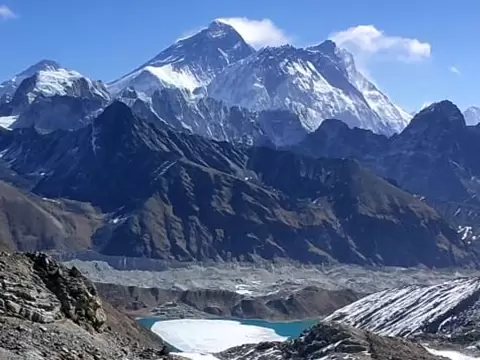
Another incredible vantage point is Gokyo Ri (5,357 m), a summit overlooking the pristine Gokyo Lakes and the vast Ngozumpa Glacier, the largest glacier in Nepal. From this peak, trekkers can enjoy panoramic views of Everest, Cho Oyu (8,188 m), Makalu (8,485 m), and Lhotse (8,516 m), forming a mesmerizing skyline. The ascent to Gokyo Ri is steep but well worth the effort for the awe-inspiring scenery.

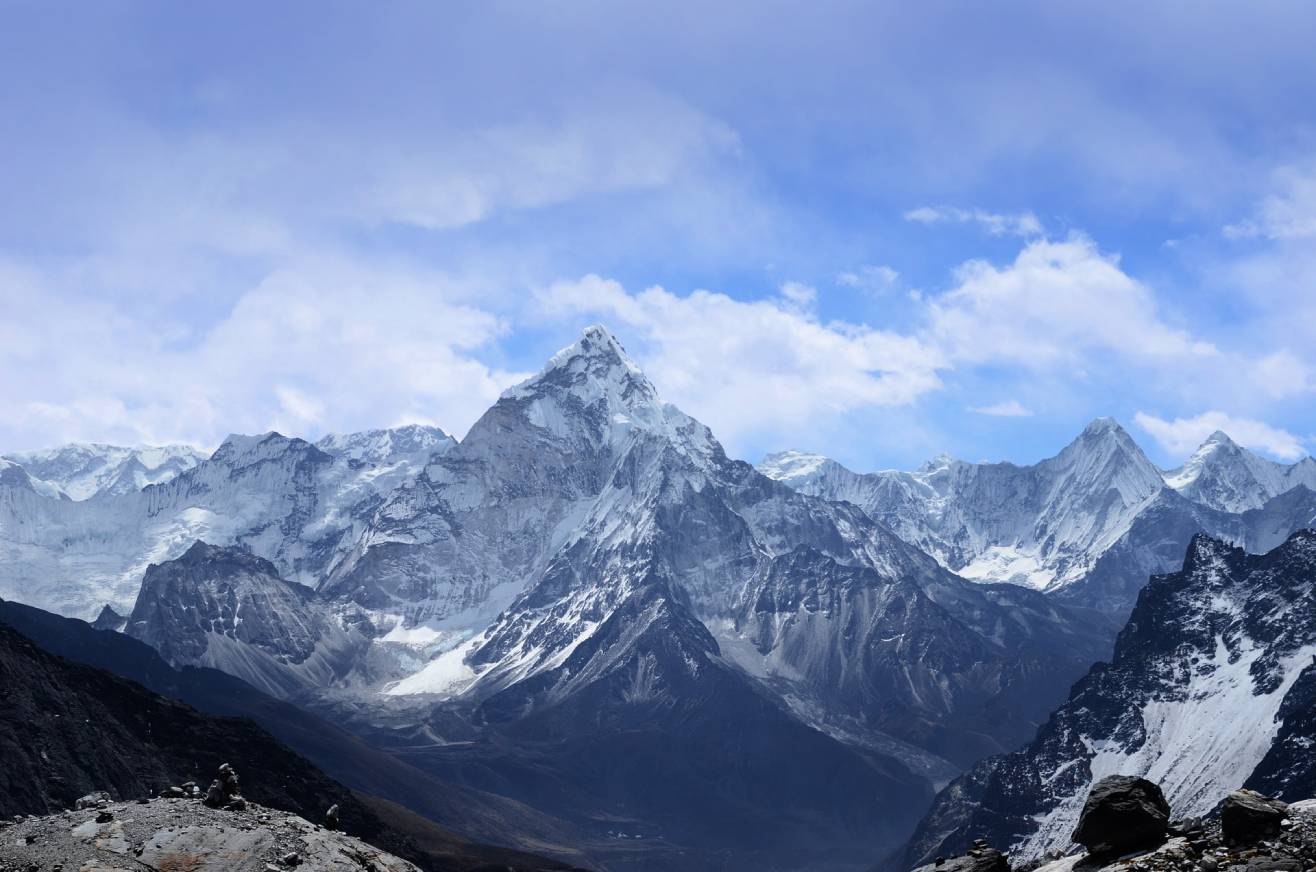
The journey also crosses Cho La Pass (5,420 m), a high altitude mountain pass that presents a dramatic, icy landscape with surreal views of surrounding glaciers and peaks. Along the route, trekkers are constantly greeted by other spectacular mountains, including Ama Dablam (6,812 m), Thamserku (6,608 m), and Kangtega (6,782 m). The ever-changing views of these majestic peaks make this trek one of the most visually stunning experiences in the Himalayas.

Natural Attractions
The Everest base camp and Gokyo valley trek is a journey through some of the most diverse and pristine natural landscapes in the Himalayas. The trek begins in the lush lower Khumbu region, where dense forests of rhododendron, pine, and juniper provide a refreshing contrast to the rugged terrain ahead. As the trail ascends, trekkers follow the Dudh Koshi River, a glacial-fed river with its milky-white waters rushing through the valleys.

One of the highlights of the trek is the Gokyo Lakes, a series of six stunning glacial lakes nestled in the high-altitude valley. These deep turquoise lakes are among the highest freshwater lake systems in the world and hold religious significance for both Hindus and Buddhists. The sight of the lakes reflecting the surrounding snow-capped peaks is truly a magical experience.

The trek also passes through the Khumbu Glacier, one of the largest glaciers in the region, stretching from Everest Base Camp. The journey across this rugged, icy terrain offers a thrilling adventure as trekkers navigate through moraines and glacial debris. The surrounding high-altitude landscapes, featuring towering cliffs, frozen streams, and vast alpine meadows, create an unforgettable Himalayan wilderness experience.

Cultural Attractions & Sherpa Villages
The Everest region is home to the legendary Sherpa people, whose rich culture and traditions make this trek more than just a physical journey. The trek passes through numerous Sherpa villages, each offering a glimpse into their unique way of life. Namche Bazaar, the largest settlement in the Khumbu region, serves as a cultural hub where trekkers can visit local markets, explore museums, and interact with the warm and hospitable Sherpa community.

In Khumjung and Khunde, trekkers can visit the famous Khumjung Monastery, which is believed to house a yeti scalp, an object of deep curiosity and legend. These villages also provide insight into the Sherpa people's spiritual connection with the mountains, as many homes have prayer flags and chortens (Buddhist shrines). The Everest View Hotel, located in this region, offers a breathtaking panoramic view of Everest and the surrounding peaks.

Further along the trail, Tengboche Monastery, the largest and most important monastery in the region, stands as a spiritual landmark with Everest towering in the background. Trekkers can witness the monks chanting prayers, spinning prayer wheels, and performing rituals that have been practiced for centuries. This monastery plays a significant role in the annual Mani Rimdu Festival, a vibrant Buddhist celebration featuring masked dances, prayers, and communal feasts.

Monasteries & Religious Significance
Buddhist monasteries and religious sites play a central role in the cultural fabric of the Everest region. Tengboche Monastery, situated at 3,860 meters, is the most renowned monastery on this trek. It serves as a spiritual center for Sherpa communities and offers a serene atmosphere where trekkers can observe daily Buddhist rituals. The monastery provides a striking view of Ama Dablam, often regarded as one of the most beautiful mountains in the world.

The trek also passes through numerous smaller chortens, mani walls, and prayer wheels, which reflect the deep-rooted Buddhist beliefs of the local people. These sacred structures are adorned with colorful prayer flags, believed to spread prayers and blessings with the mountain winds. Many trekkers participate in the ritual of spinning prayer wheels as a sign of respect and to receive good fortune for their journey.

At various points along the trail, trekkers will encounter stupas (Buddhist shrines) marking significant spiritual sites. These stupas symbolize enlightenment and are often located at scenic viewpoints. The presence of these religious landmarks throughout the trek adds a profound spiritual dimension to the adventure, making it not just a physical challenge but also a journey of reflection and inner peace.

The Everest base camp and Gokyo valley trek is a perfect blend of breathtaking natural beauty, thrilling high-altitude challenges, and deep cultural immersion. With towering peaks, shimmering lakes, ancient monasteries, and warm Sherpa hospitality, this trek offers an unforgettable Himalayan experience. Whether it’s standing at Everest Base Camp, watching the sunrise from Kala Patthar, or marveling at the turquoise Gokyo Lakes, every step of the journey is filled with wonder and adventure. Cime Himalaya Trek & Expedition invites you to explore on this extraordinary journey, where the Himalayas become not just a destination, but a lifelong memory.

Best Time for Everest Base Camp and Gokyo Valley Trek
Choosing the right time for the Everest base camp and Gokyo valley trek is crucial for an enjoyable and safe experience. The best seasons to undertake this trek are spring (March to May) and autumn (September to November), as these months offer the most favorable weather conditions, clear skies, and breathtaking views of the Himalayas.

During spring, the trails come alive with blooming rhododendron forests, adding vibrant colors to the landscape. The temperatures are moderate, making trekking comfortable, especially at higher altitudes. Spring also provides excellent visibility, allowing trekkers to witness the grandeur of Everest, Lhotse, Makalu, Cho Oyu, and other towering peaks. Wildlife enthusiasts may also spot Himalayan Thars, pheasants, and musk deer along the trail.

Autumn is another perfect time for this trek, as the monsoon rains clear the dust and haze, leaving behind crystal-clear mountain views. The daytime temperatures are mild, while the nights are crisp and refreshing. The trails are busy with trekkers from all around the world, making it a lively and social trekking experience. Additionally, local festivals such as Mani Rimdu, celebrated in Tengboche Monastery, offer a cultural insight into Buddhist traditions and Sherpa heritage.

While trekking is possible in winter (December to February), the harsh cold and heavy snowfall make it challenging, especially at high passes like Cho La Pass (5,420 m). Summer (June to August) is the monsoon season, bringing frequent rainfall, slippery trails, and cloudy skies that may obstruct mountain views. However, for those seeking solitude and a quieter trail, winter and early monsoon treks can still be rewarding with proper preparation and gear.

Everest Base Camp and Gokyo Valley Trek Difficulty Level
The Everest base camp and Gokyo valley trek is considered a challenging trek, primarily due to its high altitude, long trekking days, and steep ascents. It is a perfect choice for experienced trekkers and adventurous beginners who are physically fit and mentally prepared for the demands of high-altitude trekking.

One of the biggest challenges of this trek is altitude gain. The journey takes trekkers above 5,000 meters, with the highest points being Kala Patthar (5,560 m), Everest Base Camp (5,364 m), Cho La Pass (5,420 m), and Gokyo Ri (5,357 m). Acclimatization days in Namche Bazaar and Dingboche help prevent altitude sickness, but trekkers must be aware of symptoms like headaches, dizziness, and nausea. Slow and steady trekking, staying hydrated, and proper rest are essential to avoiding altitude-related issues.

The terrain is another factor that makes this trek demanding. The trail consists of rocky paths, steep inclines, glacier crossings, and high mountain passes. The Cho La Pass crossing is particularly challenging due to its icy slopes and unpredictable weather conditions. Some sections may require the use of crampons or trekking poles for better grip and stability. Additionally, the daily trekking duration ranges from 5 to 9 hours, requiring endurance and stamina.

Despite its difficulties, this trek is highly rewarding. The stunning scenery, breathtaking viewpoints, and unique cultural experiences make every challenge worth it. Trekkers who prepare well with cardiovascular training, strength exercises, and altitude acclimatization will find this trek both achievable and unforgettable. With proper guidance, a well-planned itinerary, and the support of Cime Himalaya Trek & Expedition, trekkers can complete this adventure safely and successfully.

Why Choose Everest Base Camp and Gokyo Valley Trek with Cime Himalaya Trek & Expedition
Selecting the right trekking company is crucial for a safe, enjoyable, and well-organized trekking experience in the Himalayas. Cime Himalaya Trek & Expedition is a trusted and experienced trekking company that ensures a personalized, professional, and memorable journey through the Everest region.

One of the key reasons to choose Cime Himalaya Trek & Expedition is their highly experienced and certified guides. Their trekking guides are locally trained, fluent in English, and have years of experience leading treks in the Everest region. They are well-versed in high-altitude trekking, safety protocols, and first aid, ensuring trekkers' well-being at all times. The company also employs porters from local villages, promoting sustainable tourism and ethical trekking practices.

Another advantage of trekking with Cime Himalaya Trek & Expedition is their thoughtfully designed itinerary. The trek includes sufficient acclimatization days to reduce the risk of altitude sickness and ensure a more enjoyable experience. The company provides comfortable accommodations in the best teahouses, nutritious meals, and reliable logistics support to enhance the trekking experience. Additionally, they take care of all necessary permits, flight bookings, and arrangements, allowing trekkers to focus on the adventure without any hassles.

Finally, Cime Himalaya Trek & Expedition offers customizable trekking packages to meet individual preferences and needs. Whether it’s a private trek, group tour, or special expedition, they provide flexible options to suit different trekking styles. Their commitment to responsible tourism, environmental conservation, and Sherpa community support makes them a responsible and ethical choice for trekking in Nepal. With their expertise, passion for adventure, and dedication to providing unparalleled trekking experiences, they ensure that the Gokyo Valley Trek via Everest Base Camp becomes an once-in-a-lifetime journey for every traveler.

The Everest Base Camp and Gokyo Valley trek is a truly spectacular adventure, combining breathtaking mountain views, high-altitude challenges, and deep cultural experiences. Whether you seek the thrill of standing at Everest Base Camp, the challenge of crossing Cho La Pass, or the serene beauty of the Gokyo Lakes, this trek has something for everyone. With Cime Himalaya Trek & Expedition, you can embark on this unforgettable journey with confidence, knowing that you are in safe, experienced, and professional hands.

Trip Itinerary

Trip itineraries are customizable according to your timetable and budget. Simply, Contact Us.

Your adventure begins with a scenic drive from Kathmandu to Manthali, a small town in the Ramechhap district. The journey takes around 5 to 6 hours, winding through the lush hills, terraced farmlands, and rural villages of Nepal. Manthali serves as the gateway for flights to Lukla, offering an alternative to the busy Tribhuvan International Airport in Kathmandu. After reaching Manthali, you will check into a local lodge and rest for the night, preparing for your early morning flight to Lukla.

An early morning flight from Manthali to Lukla marks the start of the trekking journey. The 15 minute flight provides breathtaking aerial views of the Himalayas before landing at Tenzing-Hillary Airport, one of the most thrilling airstrips in the world. Upon arrival in Lukla, you’ll meet the trekking crew, finalize gear, and begin the trek to Phakding. The trail descends gradually through rhododendron and pine forests, passing through villages like Chheplung and Ghat before reaching Phakding, a charming settlement along the Dudh Koshi River.

Today’s trek follows the Dudh Koshi River, crossing several suspension bridges, including the famous Hillary Suspension Bridge. You will pass through Monjo, the entrance to Sagarmatha National Park, where permits are checked before continuing toward Namche Bazaar. The final stretch involves a steep uphill climb, but the reward is spectacular your first glimpse of Everest in the distance. Namche Bazaar, the bustling Sherpa town, serves as the main trading hub of the Khumbu region and offers a range of accommodations, bakeries, and trekking gear shops.

To help with acclimatization, you will spend a day in Namche with a short yet rewarding hike to the Everest View Hotel, one of the highest-altitude hotels in the world. From here, you can admire panoramic views of Everest, Lhotse, Nuptse, and Ama Dablam. The hike continues to Khumjung and Khunde, traditional Sherpa villages where you can visit the Hillary School and Khumjung Monastery, which houses a supposed Yeti scalp. You will then return to Namche for an evening of rest and exploration.

The trail follows a scenic path with stunning views of Everest and Ama Dablam before descending to Phunki Tenga, a small riverside village. After crossing the river, the ascent to Tengboche begins, a challenging but rewarding climb. Tengboche is home to the famous Tengboche Monastery, the largest in the region, where trekkers can witness a peaceful evening prayer session amidst a backdrop of snow-capped peaks.

Descending through lush forests, you will cross the Imja Khola before climbing steadily toward Pangboche, the last permanent Sherpa village en route to Everest Base Camp. Continuing along the barren, windswept landscapes, you reach Dingboche, known as the "summer valley" due to its open fields and yak pastures. The higher altitude is noticeable here, so you will take it slow and enjoy the stunning mountain scenery.

A second acclimatization day includes a rewarding hike to Nangkartshang Peak, offering panoramic views of Makalu, Lhotse, and Ama Dablam. The steep climb provides excellent acclimatization while giving you a sense of the high-altitude trekking experience. You will return to Dingboche in the afternoon for a well-earned rest.

Leaving Dingboche, the trail gradually ascends through a windswept valley with stunning views of Pheriche and the surrounding mountains. You will pass through Thukla (Dughla), where a short but steep climb takes you to the Thukla Pass (4830 m). Here, you will see memorials and stone cairns built in honor of climbers who have perished on Everest. From this point, the trail becomes relatively moderate as you continue towards Lobuche, a small settlement nestled beneath Lobuche Peak. The towering peaks of Pumori, Nuptse, and Everest dominate the skyline as you approach your destination. Upon reaching Lobuche (4910 m), you will settle into your lodge, preparing for the thrilling journey to Everest Base Camp the next day.

Today’s journey takes you further into the high-altitude wilderness of the Everest region as you trek from Lobuche to Gorakshep, the last settlement before Everest Base Camp. The trail initially follows the lateral moraine of the Khumbu Glacier, with stunning views of towering peaks like Pumori, Nuptse, and Everest itself. The rugged terrain and increasing altitude make the trek more challenging, but the breathtaking scenery keeps your spirits high.

Upon reaching Gorakshep, you will take a short break before preparing for the highlight of the day—an evening hike to Kala Patthar (5,560 m). This viewpoint offers one of the best panoramic views of Mount Everest, glowing golden in the light of the setting sun. Other Himalayan giants such as Lhotse, Nuptse, and Pumori add to the stunning spectacle. After soaking in the magical views and capturing unforgettable photos, you will descend back to Gorakshep for an overnight stay, resting before the next day’s trek to Everest Base Camp.

This is the most exciting day for many trekkers as you finally reach Everest Base Camp (EBC), the iconic site where climbers prepare for their ascent of the world’s highest peak. After an early morning breakfast in Gorakshep, you will trek along the glacier moraine, navigating rocky terrain to reach the base camp. Upon arrival, you can take in the breathtaking views of the Khumbu Icefall, the first challenge faced by mountaineers attempting to summit Everest. You’ll have time to explore, take photos, and appreciate the immense energy of this legendary place.

After spending some time at EBC, you will trek back to Gorakshep for lunch before continuing your descent toward Dzongla (4,830 m). The trail gradually descends, taking you away from the Everest Base Camp route and toward the next phase of your adventure the Cho La Pass crossing. Dzongla is a peaceful and less crowded area, with magnificent views of Cholatse and Lobuche peaks. You will settle into a teahouse here, resting in preparation for the challenging day ahead.

Today is one of the most demanding yet rewarding days of the trek as you cross the Cho La Pass (5,420 m). You will start early, ascending the steep and rocky trail that leads to the top of the pass. The final section of the climb involves navigating an icy section, often requiring micro-spikes or crampons for safety. Reaching the summit of Cho La is a moment of triumph, as you are surrounded by spectacular Himalayan peaks, including Ama Dablam, Cholatse, and Baruntse.

The descent from the pass is steep and requires caution, leading into a rugged glacier field before transitioning into grassy pastures. The landscape changes dramatically as you make your way toward Dragnag, a small settlement before Gokyo. After a short break, you will continue along the Ngozumpa Glacier, the largest glacier in Nepal, before finally arriving in Gokyo (4,790 m), a stunning valley beside turquoise glacial lakes. After a long and strenuous day, you can relax at a comfortable teahouse, enjoying the breathtaking views of Gokyo Lake and Cho Oyu (8,188 m), the sixth-highest mountain in the world.

After several days of challenging trekking, today is a well-deserved rest and exploration day in Gokyo. For those who still have energy, an early morning hike to Gokyo Ri (5,357 m) is highly recommended. This viewpoint offers a 360-degree panoramic view of Everest, Lhotse, Makalu, Cho Oyu, and the stunning Gokyo Lakes. Watching the sunrise from here is an unforgettable experience.

For a more relaxed exploration, you can visit the fifth and sixth Gokyo Lakes, which are situated further up the valley and provide pristine, untouched scenery. Alternatively, you can take a short walk around the third lake and enjoy the peaceful ambiance of this remote mountain paradise. The day is also an opportunity to recover, enjoy good food, and prepare for the next high pass crossing Renjo La.

After a restful day in Gokyo, you will begin your descent towards Dole (4090 m). The trail retraces your steps along the Ngozumpa Glacier before descending through alpine meadows and yak pastures. As you leave the high-altitude terrain behind, the lush landscapes and flowing rivers become more prominent. You will reach Dole, a beautiful stop nestled in the foothills of the Himalayas, where you will spend the night.

Descending further, the trail passes through rhododendron and juniper forests, offering spectacular views of Ama Dablam and Thamserku. You will trek through Mong La and Kyangjuma, small Sherpa villages along the route, before reaching Namche Bazaar (3440 m). Upon arrival, you can enjoy a hot shower, visit a bakery, or explore the local markets in the lively Sherpa town.

The final day of trekking retraces your steps through the familiar trails of the Sagarmatha National Park, passing by Monjo, Phakding, and several scenic suspension bridges. As you descend, you’ll feel the increasing oxygen levels, making the walk easier compared to the high-altitude sections.

Upon reaching Lukla, you can celebrate with your trekking team, enjoy a relaxing evening, and reflect on the incredible journey you have just completed.

Early in the morning, you will take a short yet thrilling flight from Lukla to Manthali, where the vast Himalayan landscapes slowly transition into rolling hills and river valleys. After landing in Manthali, you will embark on a 6 to 7-hour drive back to Kathmandu, enjoying the lush scenery of rural Nepal along the way.

Upon arrival in Kathmandu, you will be transferred to your hotel, where you can finally relax, enjoy a celebratory meal, and reflect on your epic Everest base camp and Gokyo valley trek with Cime Himalaya Trek & Expedition.

Not satisfied with this itinerary? Make your own.
Plan Your Trip

Cost Includes

  • Permit: All the necessary trekking permits.
  • Accommodation: 1 night hotel in Manthali and 14 nights in lodge during the trek.
  • Road transportation: Pick-up and drop-off from Kathmandu to Manthali via a private vehicle. 
  • Domestic flight: Round trip from Manthali to Lukla includes applicable departure taxes.
  • Meal: On full-board meals (breakfast, lunch, and dinner) with a cup of tea or coffee each meal during the trek, as well as seasonal fresh fruit dessert every evening after dinner.
  • Filed staff: An experienced government-licensed, English-speaking trekking guide and necessary porter normally 1 porter for 2 trekkers who carry max 25 kg, as well as their meals, transportation, insurance, accommodations, and equipment. If there are more than 4 people in a group, there will be a guide assistant.
  • Equipment: Each of you is given a waterproof duffle bag by our agency to use during your trek. Leave the materials you don't need for trekking in your travel bag at your hotel in Kathmandu.
  • All government, local taxes, and official expenses
  • Water purification tablets to purify your water during the trek for safe drinking water.
  • An oximeter to measure your oxygen and pulse level during the trek in the mountain is very useful for all trekkers to be aware of high altitude sickness.
  • We assist in arranging emergency rescue operations in the event of complex health conditions, and your travel insurance will cover the cost.

Cost Excludes

  • Fares for international flights
  • Nepal entry visa fee on arrival at Tribhuvan International Airport: US$ 50 for 30 days.
  • All meals and accommodation in Kathmandu
  • Personal expenses: shopping, snacks, boiled water, extra tea/coffee, cold drinks, hot shower, alcohol, Wi-Fi, telephone call, battery re-charge fee, extra porters, etc.
  • Your personal trekking/hiking gear 
  • Travel insurance that is mandatory for emergency high-altitude rescue and evacuation
  • Tips for guides and porters that are highly recommended
  • Additional costs may occur due to causes beyond our control, such as landslides, weather conditions, itinerary modifications due to safety concerns, illness, changes in government policies, strikes, etc.
  • All other services, costs, and expenses not listed in the list of costs included.
  • If you depart earlier than the itinerary program, your payment will not be refunded, and early arrival or late departure expenses will not be covered by your trip cost.

Trip Info

Food & Accommodations during the trek
The Everest base camp and Gokyo valley trek offers a mix of traditional teahouses and lodge accommodations, providing a comfortable resting place after each day’s journey. The tea houses are simple yet cozy, with basic amenities such as twin-sharing rooms, blankets, and a communal dining area with a warm fireplace. In popular villages like Namche Bazaar, Dingboche, and Gokyo, trekkers can find lodges with attached bathrooms, hot showers, and even Wi-Fi facilities. However, as the altitude increases, accommodations become more basic, with fewer amenities available.

Meals along the trekking route are served in teahouse dining halls, where trekkers can enjoy a variety of local, Nepali, Tibetan, and international dishes. The staple trekking meal is Dal Bhat, a nutritious and filling combination of rice, lentil soup, vegetables, and pickles, which provides the necessary energy for long trekking days. Other food options include noodles, fried rice, momos (dumplings), pasta, pancakes, soups, and chapati. In major villages, some teahouses even offer pizza, burgers, and bakery items to cater to diverse tastes.

While food is readily available throughout the trek, it is advisable to stick to vegetarian meals to avoid the risk of foodborne illnesses. Meat is available at some lodges, but since it has to be transported from lower altitudes without proper refrigeration, its freshness cannot always be guaranteed. For snacks, trekkers can bring energy bars, nuts, chocolates, and instant coffee/tea to supplement their meals. Eating high-calorie, warm, and easily digestible food is essential for maintaining energy levels at high altitudes.

Drinking Water on the trek
Staying hydrated is one of the most important aspects of high-altitude trekking, as dehydration can worsen the effects of altitude sickness. Along the Everest base camp and Gokyo valley trek, various options are available for drinking water. The most common source is bottled water, which can be purchased at teahouses and shops along the trail. However, as trekkers ascend to higher elevations, bottled water becomes more expensive due to transportation costs.

A more eco-friendly and cost-effective option is refilling water bottles at teahouses and natural water sources. Water from taps, streams, and rivers is widely available, but it must be purified before drinking. Trekkers are advised to carry water purification tablets, a filtration system, or a UV water purifier (such as Steripen) to ensure safe drinking water. Many teahouses also offer boiled water, which is a safer alternative but may cost extra.

It is recommended to drink at least 3 to 4 liters of water per day to stay hydrated and help with altitude acclimatization. Avoiding alcohol and caffeinated drinks is also advisable, as they can contribute to dehydration. Proper hydration plays a crucial role in maintaining stamina and preventing altitude sickness, making it an essential part of a successful trekking experience.

Charging Facilities on the trek
While trekking through the Everest region, charging electronic devices such as mobile phones, cameras, and GPS devices can be challenging, especially at higher altitudes. Most tea houses along the trail provide charging stations, but they come at an additional cost, ranging from $2 to $5 per hour, depending on the altitude. The higher you go, the more expensive the charging fees become due to limited electricity supply.

Electricity in lower villages like Lukla, Phakding, and Namche Bazaar is supplied through hydropower, making charging more accessible and affordable. However, as trekkers move toward Dingboche, Lobuche, Gorakshep, and Gokyo, the power supply is mainly dependent on solar energy, which can be unreliable during cloudy or snowy weather. In some remote areas, power shortages may occur, limiting charging opportunities.

To avoid reliance on paid charging services, trekkers are recommended to carry power banks, solar chargers, or spare batteries for their devices. A 20,000 mAh power bank can typically last for several days and is a good backup for essential electronics. Since cold temperatures drain battery life faster, keeping electronic devices inside sleeping bags at night helps preserve battery power. Planning ahead for charging needs ensures that trekkers can capture their adventure without worrying about running out of battery.

Network & Communications on the Trek
Staying connected during the Everest base camp and Gokyo valley trek can be challenging due to limited mobile network coverage and internet connectivity in remote areas. However, trekkers can still access mobile signals, Wi-Fi, and satellite communication at various points along the route.

Two major mobile network providers in Nepal, NCELL and NTC (Nepal Telecom), offer SIM cards that provide connectivity along the trekking trail. NCELL tends to have better network coverage in lower regions like Lukla, Phakding, and Namche Bazaar, while NTC provides more reliable service in higher-altitude areas such as Dingboche and Gokyo. However, once trekkers reach Lobuche, Gorakshep, and Everest Base Camp, mobile signals become weak or unavailable.

Most teahouses offer Wi-Fi services, but they are slow, expensive, and unreliable, especially at higher elevations. Wi-Fi in places like Namche Bazaar is relatively stable, but in Gorakshep and Gokyo, the connection is intermittent due to the remoteness of the location. Some trekkers opt to use a SkyLink satellite internet service, available at some lodges for an additional charge. For emergencies, satellite phones are used by trekking guides and rescue teams to ensure communication even in the most remote areas.

For those who want to stay connected, purchasing a local SIM card with a data package in Kathmandu before the trek is a good option. However, it’s important to embrace digital detox and focus on the beauty of the Himalayas rather than relying on internet connectivity. Trekking in the Everest region is a perfect opportunity to disconnect from daily distractions and immerse in nature.

Weather Conditions on the trek
The weather in the Everest region varies significantly based on the season, altitude, and time of day. Understanding the weather conditions helps trekkers prepare for the challenges they may face along the route.

During spring (March to Jun), the weather is mild and stable, with daytime temperatures ranging from 10°C to 15°C at lower altitudes and dropping to -5°C to -10°C at higher elevations like Everest Base Camp and Gokyo Ri. The skies are clear, providing excellent visibility of the Himalayan peaks. Spring is also the time when rhododendrons bloom, adding beautiful colors to the trail.

Autumn (September to December) is another ideal season, offering crisp air, clear skies, and stable weather conditions. Daytime temperatures are similar to those in spring, but nights can be colder. The visibility is at its best, making it a perfect time for trekking and photography. Since this is peak season, the trails and teahouses are often busy with trekkers from around the world.

In winter (January to February), temperatures drop significantly, ranging from -10°C to -20°C at higher altitudes. Heavy snowfall can block trails, especially Cho La Pass, making the trek more challenging. However, for those who can endure the cold, winter offers quieter trails and stunning snow-covered landscapes.

Summer (July to August) is the monsoon season, bringing heavy rainfall, fog, and leech-infested trails in the lower regions. However, for trekkers who don’t mind the rain, this season provides a lush green landscape and fewer crowds. Since the higher-altitude areas receive less rainfall, trekking is still possible with proper rain gear and preparation.

Regardless of the season, the weather in the Himalayas is unpredictable, with rapid changes in temperature, wind speed, and visibility. Layered clothing, waterproof gear, and good-quality trekking boots are essential for handling the varying weather conditions along the trail.

With ever-changing landscapes, challenging high passes, and rewarding mountain views, the Everest base camp and Gokyo valley trek is a remarkable adventure. By preparing well for food, water, charging, connectivity, and weather, trekkers can experience the Himalayas in all their glory with Cime Himalaya Trek & Expedition, ensuring a safe, comfortable, and unforgettable journey.
Why Book with Us
  • Excellent customer service. Our travel experts are ready to help you 24/7.
  • Best price guaranteed
  • No credit card or booking fees.
  • 100% financial protection.
  • Environmentally-friendly tours.

Equipment List

We advise that carrying the appropriate and proper equipment is better than carrying an excessive quantity of equipment. So, one should only carry appropriate and only absolutely necessary equipment with self; 

HEAD
  • Bandana or headscarf, also useful for dusty conditions
  • Warm hat that covers your ears (wool or synthetic)
  • Headlight with extra batteries and bulbs
  • Sunglasses with UV protection
UPPER BODY 
  • Polypropylene shirts (2 half sleeve and 2 long sleeves)
  • Light and expedition weight thermal tops
  • Fleece wind-stopper jacket or pullover
  • 1 ultra-light down jacket 
  • 1 warm down vest and/or jacket
  • Gore-Tex jacket with hood, waterproof and breathable
HANDS
  • 1 pair of lightweight poly liner gloves.
  • 1 pair of lightweight wool or fleece gloves
  • 1 pair of mittens, consists of 1 Gore-Tex over mitt matched with a very warm polar-fleece mitt liner (seasonal)
LOWER BODY 
  • Non-cotton underwear briefs
  • 1 Hiking shorts
  • 1 pair of hiking pants
  • 1 pair of lightweight thermal bottoms (seasonal)
  • 1 pair of fleece or woolen trousers
  • 1 waterproof, windproof pants (Gore-Tex or similar)
FEET
  • 2 pairs of thin, lightweight inner socks
  • 2 pairs of heavy poly socks
  • 1 pair of Hiking boots with spare laces (sturdy soles, water-resistant, ankle support, “broken-in”)
  • 1 pair of running shoes and sandals
  • Cotton socks (optional)
SLEEPING BAG
  • 1 sleeping bag (good to -15⁰C) it’s rentable in Kathmandu. 
LUGGAGE & DAYPACK 
  • Your travel luggage with your all materials
  • A backpack (35 to 40 liters) for carrying yourself during the trek with necessary items.
  • 1 waterproof backpack covers (optional)
  • A large duffle bag (it will be provided by Cime Himalaya Trek & Expedition)
FIRST AID KIT
  • Small, personal first-aid kit. (simple and light)
  • Aspirin, first-aid tape, and plasters (Band-Aids)
  • 1 skin-blister repair kit
  • Anti-diarrhea pills
  • Anti-headache pills
  • A cough and/or cold medicine
  • Anti-altitude sickness pills: Diamox or Acetazolamide
  • Stomach antibiotic: Ciprofloxacin, etc. Do not bring sleeping pills as they are a respiratory depressant.
  • Water purification tablets or the water filter
  • 1 set of earplugs
  • Extra pair of prescription glasses, contact lens supplies
PRACTICAL ITEMS
  • 1 small roll of repair tape, 1 sewing-repair kit
  • 1 cigarette lighter, 1 small box of matches if you smoke.
  • 1 compass or GPS (optional)
  • 1 alarm clock/watch
  • 1 digital camera with extra cards and batteries
  • 2 large Ziplocs plastic bags
  • 1 water bottle of 1L or 1.5 liters 
  • 1 thermos – 500ml or 1L 
  • 1 small pocket knife
  • Binoculars (optional) if you need
  • 1 pair of adjustable trekking poles
TOILETRIES
  • 1 medium-sized quick-drying towel
  • Toothbrush/paste (preferably biodegradable)
  • Multipurpose soap (preferably biodegradable)
  • Deodorants
  • Nail clippers
  • Face and body moisturizer
  • Female hygiene products
  • Small mirror
PERSONAL HYGIENE
  • Wet wipes (baby wipes)
  • Tissue /toilet roll can buy in trek 
  • Anti-bacterial handwash
EXTRAS 
  • Reading book
  • Trail map/guidebook
  • Plug adapter (2 round pegs to 2 flat pegs)

Frequently Asked Questions

The Everest base camp and Gokyo valley trek is a unique and adventurous trekking route that combines the famous Everest Base Camp (5,364 m) with the stunning Gokyo Valley and Gokyo Lakes. Unlike the classic Everest Base Camp Trek, which follows the traditional route to EBC and back, this trek takes you across Cho La Pass (5,420 m) to the pristine turquoise Gokyo Lakes (4,790 m), offering a different perspective of the Everest region.

One of the key highlights of this trek is the climb to Gokyo Ri (5,357 m), which provides one of the best panoramic views of Everest, Lhotse, Makalu, and Cho Oyu. This trek also allows trekkers to explore the Ngozumpa Glacier, the largest glacier in Nepal, making it a more diverse and scenic adventure. The trail is less crowded than the standard EBC route, offering a more peaceful and immersive Himalayan experience.

The Everest base camp and Gokyo valley trek is considered a challenging trek due to its high altitude, long trekking days, and the crossing of Cho La Pass (5,420 m). The trek requires good physical fitness, endurance, and mental preparedness. Trekkers must be comfortable walking 5-8 hours per day on rugged terrain with steep ascents and descents.

The main challenge of this trek is altitude sickness, as the trail takes you above 5,000 meters multiple times. To minimize risks, the itinerary includes acclimatization days in Namche Bazaar and Dingboche. The Cho La Pass section can be particularly demanding due to its icy trails and unpredictable weather conditions, requiring proper trekking gear and sometimes crampons. However, with the right preparation, proper acclimatization, and the support of Cime Himalaya Trek & Expedition’s expert guides, this trek is achievable and highly rewarding.

The best seasons for this trek are spring (March to May) and autumn (September to November). During these months, the weather is stable, skies are clear, and the mountain views are spectacular.

In spring, the trail is vibrant with colorful rhododendron forests, and the temperatures are moderate, making trekking conditions comfortable. It’s also a great time for wildlife spotting. Autumn is another popular season, with crisp air, excellent visibility, and ideal trekking temperatures. This season is also less humid, making it perfect for photography and high-altitude trekking.

Winter (December to February) is possible but challenging due to extreme cold and heavy snowfall, which can make the Cho La Pass crossing difficult. Summer (June to August) is the monsoon season, bringing rain, slippery trails, and clouded views, though it is still a viable option for those who prefer solitude and lush green landscapes.

The trek offers teahouse accommodation, which provides a basic yet comfortable stay. Rooms are twin-sharing with beds, blankets, and pillows, though at higher altitudes, heating is limited. In popular areas like Namche Bazaar, some lodges offer attached bathrooms, hot showers, and Wi-Fi, but as you ascend, facilities become more basic.

Food options are varied and nutritious, with Dal Bhat (rice, lentils, and vegetables) being the staple meal. Other available meals include noodles, pasta, soups, momos, fried rice, eggs, pancakes, and porridge. Some teahouses even offer pizza, burgers, and bakery items in larger villages. Trekkers are advised to avoid meat at higher altitudes since it is carried up without refrigeration.

Drinking enough water is crucial to preventing altitude sickness and dehydration. Bottled water is available at teahouses but becomes expensive at higher altitudes due to transportation costs. The best option is to refill water from natural sources or teahouse taps and use water purification tablets, filters, or a UV sterilizer.

Many teahouses offer boiled water, which is safer but may come at an extra cost. It’s recommended to drink at least 3-4 liters of water per day and avoid excessive caffeine and alcohol, as they contribute to dehydration.

Yes, charging facilities are available at teahouses, but they come at an extra cost, ranging from $2 to $5 per hour, depending on the altitude. Charging is mainly done through solar power at higher elevations, which can be unreliable during bad weather. Carrying a power bank or solar charger is recommended to keep your devices powered.

Wi-Fi is available in most teahouses, especially in Namche Bazaar, Dingboche, and Gokyo, but it can be slow and expensive ($3-$10 per use). Some trekkers opt for local SIM cards (NCELL or NTC), which work in certain areas but have limited coverage above 4,000 meters. Satellite phones are used in emergencies by trekking guides and rescue teams.

Trekkers need the following permits:

  • Sagarmatha National Park Entry Permit – Required to enter the Everest region.
  • TIMS (Trekkers’ Information Management System) Card – A general trekking permit.

Both permits are arranged by Cime Himalaya Trek & Expedition, so trekkers don’t have to worry about paperwork. These permits help in conservation efforts and provide access to trekking routes.

Yes, travel insurance is mandatory for this trek. Since the trek involves high-altitude trekking above 5,000 meters and the possibility of altitude sickness, insurance must cover emergency helicopter evacuation, medical expenses, trip cancellations, and altitude-related illnesses. Without proper insurance, the cost of evacuation can be very expensive.

Cime Himalaya Trek & Expedition strongly recommends getting comprehensive insurance before starting the trek. Always check if your policy covers trekking in remote high-altitude areas up to 6,000 meters.

Yes, altitude sickness (Acute Mountain Sickness – AMS) is a real concern when trekking in the Everest region. Symptoms include headache, dizziness, nausea, fatigue, and difficulty sleeping. To prevent AMS:

  • Ascend gradually and follow proper acclimatization days (as per the itinerary).
  • Drink plenty of water (3-4 liters per day) and avoid alcohol/caffeine.
  • Eat a balanced diet with enough calories to maintain energy levels.
  • Take Diamox (if prescribed) to aid acclimatization.
  • Notify your guide immediately if you feel unwell—descending to a lower altitude is the best remedy.

With proper acclimatization and guidance from Cime Himalaya Trek & Expedition’s experienced team, the risk of AMS can be minimized.

Cime Himalaya Trek & Expedition offers expert-guided, well-organized, and safe trekking experiences. We provide:

  • Experienced, government-licensed guides trained in high-altitude trekking and first aid.
  • A well-paced itinerary with proper acclimatization for a successful trek.
  • Small group sizes and personalized service for an immersive adventure.
  • Ethical and responsible trekking practices, ensuring fair wages for porters.
  • 24/7 support and safety monitoring, including emergency evacuation assistance.

With Cime Himalaya Trek & Expedition, you’ll experience the best of Everest base camp and Gokyo valley trek with safety, comfort, and expert guidance.

Read more FAQs

Similar Trips

Most Popular
Trekking
Everest Base Camp Trek - 13 days
Difficulty
Moderate
Max. altitude: 
5,560 m
US$ 1,335 PP IN GROUP
Explore
Trekking
Everest Three High Passes Trek - 17 days
Difficulty
Strenuous
Max. altitude: 
5,560 m
Price on request
Explore

Join Our Newsletter

Sign up to stay updated with latest offers, recent events and more news.